Can a simple plan turn your next trip into a week of flavorful, stress-free meals?
You can. With a little prep and the right gear, you’ll eat well without hauling heavy coolers or wasting time when hunger hits after a long hike.
Start by choosing a mix of make-ahead stews, quick stove-top dishes, and one-pot grill favorites. Prep at home by washing and chopping veggies, pre-measuring spices, and freezing portions to thaw by day.
Pick ingredients that overlap across meals to save space and keep food fresh. Learn to cook on a camp stove, cast-iron skillet, or portable grill so every course turns out reliable and tasty.
From chickpea wraps you finish on site to hearty stews warmed in cast iron, you’ll find options that match the energy you need for hiking and long days outdoors.
Key Takeaways
- Plan meals by day to save time and reduce pack weight.
- Prep veggies and spices at home to speed up cooking at camp.
- Choose overlapping ingredients to minimize cooler space.
- Use make-ahead stews and quick fireside dishes for variety.
- Match meals to activity level—hearty or light as needed.
Smart Camping Prep: How to Plan, Pack, and Cook Vegan Meals in the Wild
Decide how you’ll cook before you pack so meal prep at camp is quick and stress-free.
Know your setup. Confirm fire restrictions at the campground and choose whether you’ll rely on a camp stove, a portable propane grill, or a cast-iron setup over coals. A cast-iron griddle or skillet is ideal for searing and grilling over an open flame.
Prep at home for faster meals. Wash and chop vegetables, pre-measure spices, and batch-cook soups or an 8-ingredient chili in small containers. Portion and freeze those packs so they thaw quickly and take less time at the site.
- Pack clean water for drinking and cooking; carry a filter if you’ll top up from streams.
- Label frozen containers with meal name and day for fast access when you arrive.
- Bring a wind-resistant stove screen and reliable ignition to save fuel and time.
- Stash shelf-stable backups like nut butter, crackers, and precooked grains in case gear fails or you’re in a no-fire zone.
Match gear to meals — cast iron for searing, a lidded pot for stews, and a grill grate for kebabs and veggies. Season at home in small jars and use oil-free techniques to keep coolers cleaner and lighter.
| Meal Type | Best Gear | Prep at Home | Backup |
|---|---|---|---|
| Stew/Chili | Lidded pot, camp stove | Batch-cook, freeze in portions | Precooked quinoa, crackers |
| Skillet Meals | Cast-iron skillet | Chop veggies, pre-measure spices | Nut butter packs, crispbread |
| Grill & Skewers | Propane grill or grate | Marinate and pack on skewers | Trail mix, energy bites |
Make-Ahead Vegan Camping Recipes You Can Reheat and Eat
Freezing smart and packing tidy turns long days into hot, ready meals in minutes.
Batch an 8-ingredient slow-cooker chili at home, portion it into cup-size containers, and freeze flat so each cup thaws quickly. At camp, drop a single cup into a lidded pot with a splash of water and warm for 5–8 minutes until steaming. Label each cup with reheat minutes and key ingredients for easy meal duty.
For hearty stews, stew canned chickpeas and lentils in whole peeled canned tomatoes with sautéed greens. Freeze smaller portions that rewarm in a pot with minimal water and cleanup.
Bake peanut butter granola bars and pumpkin-seed granola ahead for grab-and-go breakfasts. Mix energy bites that hold up without refrigeration and pack vegan cheesy crackers in airtight containers for a crisp snack.
- Diversify textures: soft stews, chewy bars, and crunchy crackers keep meals interesting.
- Carry a small spice mix—cumin, smoked paprika, chili powder—to freshen flavors after reheating.
- Store dry items separate from cold packs to avoid moisture and extend shelf life up to 10 days.
One fresh finish—a squeeze of lime or chopped scallions—keeps reheated dishes tasting bright and vibrant.
Breakfast on the Trail: Quick Easy Morning Meals to Start Your Day
Mornings on the trail go smoother when you pack breakfasts that heat fast and need little gear.
Make-ahead oatmeal packets are a top choice. Follow Ginger Bracamontes Connelly’s method: mix quick oats, oat bran, chia, dried fruit, nuts, and seeds into single-serve pouches. Add a cup of hot water, stir, and eat in minutes.
For a savory option, cook grits with diced potato, chives, and onions. Rebecca Wold tops hers with ketchup sometimes. This fills you up for a full day of activity and uses basic ingredients.
Whisk chickpea flour with water and spices for a tofu-free scramble. It cooks fast in a small skillet and boosts protein without extra weight.
Rotate in apple pie quinoa porridge and coconut-infused oats for variety. Simmer quinoa with apples and cinnamon, or stir in coconut milk powder to add richness without refrigeration.
| Option | Prep | Cook Time |
|---|---|---|
| Oatmeal packets | Pre-mix ingredients into pouches | 2–3 minutes with hot water |
| Grits with potato | Dice potatoes, chop chives/onions | 8–10 minutes |
| Chickpea scramble | Whisk flour and spices | 5 minutes in a skillet |
- Boil water first, then finish grains with residual heat to save fuel.
- Pre-portion toppings and keep pans small for fast cleanup.
- Plan quick oats for early starts and scrambles on slower mornings.
Vegan Camping Snacks and Trail Fuel
Build a small box of grab-and-go bars, bites, and savory nibbles to simplify refueling.
Make peanut butter granola bars before you leave so they double as breakfast and trail fuel. Pack fruit leathers—homemade or bought—in varied flavors for a lightweight, mess-free sweet hit. Roll bliss balls with oats, dates, and nuts for a whole-food boost that holds up all day.
Pop campfire popcorn with a smoky spice rub for a communal appetizer. Sprinkle a little nutritional yeast for a savory, umami “cheese” vibe.
- Bake tortilla chips ahead and top with salsa and canned beans for a filling snack.
- Keep a small snack box accessible in your car or pack so you don’t unpack the whole kitchen.
- Pack portions in reusable bags and rotate sweet and savory options to avoid palate fatigue.
Handhelds and No-Fuss Lunches: Wraps, Buns, and Bowls
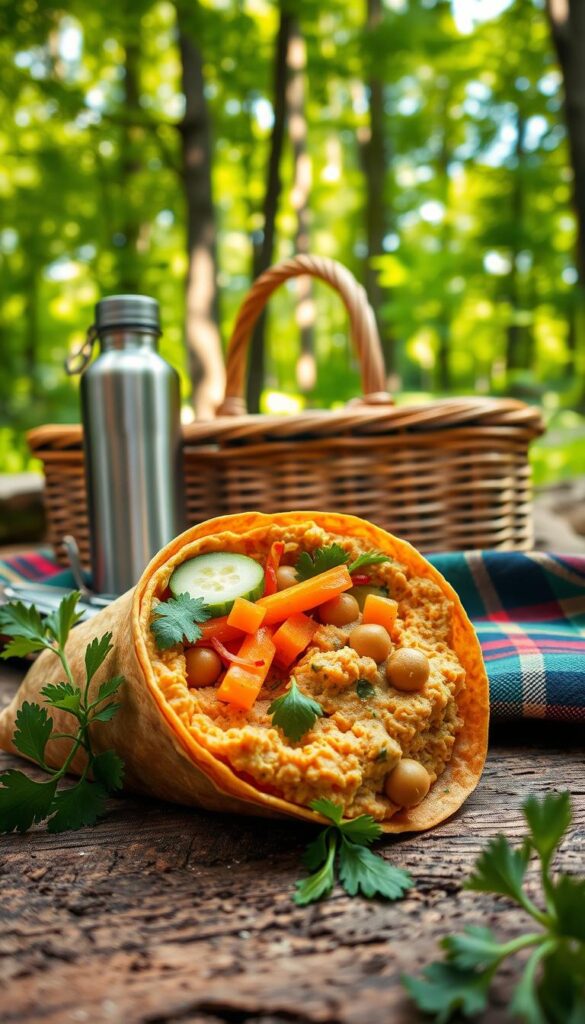
Pack lunches that are fast to assemble and hard to forget.
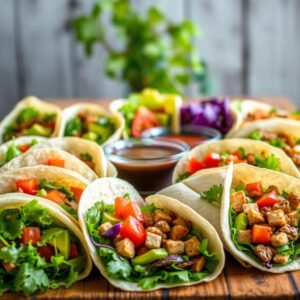
Chickpea salad wraps mix mashed chickpeas with avocado, turmeric, and a smear of hummus. Add roasted red peppers and whole-wheat tortillas for a filling, protein-rich option that holds up all day.
Chickpea salad with hummus and roasted peppers
You spread single-serve hummus on the wrap, pile on the mashed chickpea-avocado mix, then fold. Pack fillings separately to keep textures bright and assemble at mealtime.
Carrot “dogs” on buns with classic condiments
Steam carrots at home until tender, marinate, then grill quickly on site. Slide them into buns with mustard, relish, and ketchup for a nostalgic dinner that’s also simple to make.
- Add beans, shredded greens, or pickled onions to boost fiber and crunch.
- Use whole-grain tortillas or sturdy buns to stay full through the afternoon.
- Carry a single condiment bag and single-serve hummus packs for easy customization.
“Handhelds keep your day moving — fast to make, easy to store, and satisfying to eat.”
Pasta and Grain Bowl Favorites for Camp Comfort
Hearty starches and bright bowls make dinner simple and satisfying after a day outdoors.
Prep at home to save time. Cook whole-grain pasta and lentils or chickpeas ahead, cool, and pack flat. Bring a jar of oil-free marinara with tomatoes and a tiny spice kit for quick adjustments.
Lentil or Chickpea Bolognese
Combine pre-cooked lentils or a chickpea boost with whole-grain pasta and your marinara sauce in a cast-iron skillet. Add a splash of water and warm for a few minutes until the sauce loosens and the pasta steams.
Why this works: You cut minutes at camp, reduce cleanup by using one pot, and serve pasta as a full course or a smaller side with grilled vegetables.
Confetti Quinoa with Mixed Vegetables
Stir together quinoa, peppers, zucchini, or frozen peas with garlic, fresh ginger, black pepper, and a dash of liquid aminos. Heat gently and finish with fresh herbs or chili flakes for aroma.
- Pack tomatoes in the marinara and adjust acidity with lemon or spice at the stove.
- Portion leftovers for easy next-day lunches so you cook once and eat twice.
Soups, Stews, and Chili by the Campfire
A simple pot of soup turns pantry staples into a comforting, no-fuss meal.
Make dinner fast by using canned tomatoes, beans, and a small spice kit. These one-pot ideas save time and cut cleanup.
Mexican tortilla soup with pantry ingredients
Start with onions, garlic, a can of tomatoes, and broth. Add spices, a splash of water, and crisp tortilla strips. Simmer until flavors meld — this soup comes together in minutes.
Red lentil stew and sweet potato peanut stew
Red lentils cook quickly and thicken the pot in about 15 minutes. For the peanut version, stir in peanut butter and diced potato for a rich, creamy finish.
Vegan chili over campfire-baked sweet potatoes
Portion chili into cup-sized containers so each cup thaws fast. Reheat in a single pot and ladle over baked potatoes for a hearty bowl. Finish with lime, cilantro, or sliced jalapeño to brighten the bowl.
“Portioning ahead speeds dinner and keeps everyone fed faster.”
Campfire and Grill Specials: Veggies, Skewers, and Kebabs
Turn embers into an oven: you can create hearty skewers and seared mushroom steaks in minutes. With a short marinade and a hot pan or grate, simple ingredients become bold, shared meals.
Portobello steaks and zucchini in cast iron
Marinate portobello caps with a splash of liquid smoke, soy, and oil-free herbs. Sear them with sliced zucchini in a cast-iron skillet over the fire for a meaty texture and deep flavor.
Ratatouille-style kebabs and summer squash skewers
Thread summer squash, peppers, and onions on skewers. Grill on a grate so they caramelize and char evenly. Baste lightly to build layers without causing flare-ups.
Foil-roasted corn with chipotle-lime
Soak ears (husks on) in water, wrap in foil, and roast in embers 15–30 minutes. Finish with a chipotle-lime sauce for smoky, tangy camping food that pairs well with grains or wraps.
- Pre-chop and marinate vegetables in leakproof bags to save time at camp.
- Manage heat zones to sear sturdy pieces and gently cook delicate ones.
- Keep a spray bottle of water to tame unexpected flare-ups while grilling.
Tacos, Fajitas, and Burgers: Crowd-Pleasing Camping Meals
You can feed a group with minimal gear by staging tacos, fajitas, and grilled burgers that finish fast and taste like effort.
Beer-simmered cauliflower tacos get big flavor from a quick simmer in beer and spices. Top with bright, quick pickled red onions and a squeeze of lime for a gourmet feel that cooks in minutes.
Sweet potato–black bean tacos and fajitas
Roast sweet potato ahead, warm black beans on site, then grill peppers and onions for fajita flair. Use sturdy tortillas to hold the fillings and let each person build their own plate.
Plant-based burgers and maple-soy tempeh
Press patties at home and freeze or chill, then sear on the grill. Marinate tempeh in a maple-soy sauce and caramelize for buns or bowls.
- Stage a simple taco bar: salsas, herbs, lime wedges, and a small sauce kit.
- Pre-cook dense veg so finish time over the flames is short.
- Use leftovers over pasta or rice to avoid waste the next day.
| Meal | Prep at Home | Finish at Site | Best For |
|---|---|---|---|
| Cauliflower tacos | Trim, spice, and par-cook | Simmer 8–10 minutes, add pickles | Groups |
| Sweet potato tacos | Roast cubes, pack beans | Warm, grill peppers/onions | Hearty dinner |
| Burgers / tempeh | Form patties, marinate tempeh | Grill 4–6 minutes per side | Quick grill night |
Potatoes on the Fire: The Ultimate Camping Staple
Potatoes are a reliable, filling base for meals that scale to any group or appetite. You can prep them simply at home or finish everything in one hot cast-iron pan at the site.
Skillet potato scramble with black beans, peppers, and onions
Nothing beats a skillet of crispy cubed potatoes for a filling meal by the fire. Cube red and yellow potatoes, then crisp them in a large cast-iron skillet until edges brown and centers are tender.
Stir in rinsed black beans, chopped onions, and bell peppers. Season with smoked paprika and cumin to mimic that charred, camp flavor.
Finish with salsa and sliced avocado for creaminess and brightness. Serve hot for breakfast or a hearty dinner.
- Parboil potatoes at home to cut down minutes over the fire.
- Keep a small cup of water to steam-finish stubborn chunks without burning.
- Use a flat spatula and sturdy utensils to prevent sticking and preserve texture.
“Leftovers make great taco or wrap fillings the next day.”
Pro tip: Rotate potato varieties—waxy types hold shape, russets get fluffy—so you control texture without extra work. This simple recipe fits well into your vegan camping plan and scales by the cup or pan size.
Backpacking-Friendly Vegan Meals: Lightweight and High-Protein
When every ounce counts, choose dehydrated and instant mixes that rehydrate fast with hot water.
Dehydrate a hearty chili at home so it rehydrates into a warm bowl in minutes on the trail. Pack single-serve pouches and label each with the cup of water needed and rehydration minutes.
Instant grains and shelf-stable protein
Bring instant oats, couscous, or quick rice to pair with pouch beans or a cup of powdered soup. These combos give carbs and protein with minimal weight.
- Carry nut butter packets and sturdy crackers for no-cook, high-calorie snacks.
- Use pouch beans to skip can openers and cut weight.
- Measure portions into single-serve bags so you boil only the water you need.
- Test rehydration minutes at home so you know how long to wait on the trail.
- Pack seasonings—chili flakes, garlic powder, and lime—to brighten simple ingredients.
- Stash fragile items inside your cookpot to protect them while hiking.
Bring a lightweight cup and spork so you can eat directly after rehydration and keep cleanup to a minimum. Balance protein, carbs, and fats to fuel long hiking days without extra bulk.
“Test meals at home to dial in water and timing before you head out.”
Sauces, Mixes, and Easy Add-Ons to Elevate Camping Meals
Pack a few bold sauces and spice mixes to turn simple ingredients into standout meals.
Make an oil-free marinara at home and portion it into jars. Pour it over pasta or black beans for a fast, satisfying dinner that needs little fuel to rewarm.
Blend smoky spice rubs in advance to dust on vegetables or kebabs before grilling. The rubs add deep flavor without introducing extra oil.
Quick add-ons to pack
- Whisk a simple peanut sauce on site to turn noodles or grain bowls into a rich main.
- Make quick pickled onions in a jar so tacos and burgers gain bright acidity and color.
- Stir salsa from canned tomatoes, a squeeze of lime, and spices when fresh produce is limited.
- Keep hummus tubs or single-serve packs for spreads, dips, or creamy boosts.
Pro tips: Season black beans with a spoonful of marinara or your rub to create cohesive plates. Pack small mix pouches labeled by use and rotate sauces through the week to keep meals exciting.
“A single jar of sauce can change a handful of ingredients into a complete meal.”
| Add-On | Pack From Home | Best Use |
|---|---|---|
| Oil-free marinara | Batch and jar | Pasta, beans, stews |
| Smoky spice rub | Mix dry spices | Grilled vegetables, kebabs |
| Peanut sauce | Powdered peanut + water mix | Bowls, noodles |
| Quick pickled onions | Vinegar, sugar, jar | Tacos, burgers, bowls |
Fresh and Make-Ahead Salads for Hot Days
Keep cool on hot days with make-ahead salads that travel well and need only a quick refresh before serving.
Pineapple-cucumber salad is bright, hydrating, and ideal when packed over ice. Dice pineapple and cucumber, toss with lime, chopped mint, and a pinch of salt. Chill flat in rigid containers so the pieces stay firm and the dressing won’t leak.
Classic potato salad makes a reliable first-night meal. Boil and cube potatoes at home, fold in chopped celery, scallions, and a tangy oil-free dressing if you prefer lighter travel. Portion into individual tubs so guests grab a ready plate after a long day.
Simple tips for packing and serving
- Prep pineapple-cucumber salad at home so it’s chilled and ready when the day turns hot.
- Make classic potato salad ahead to serve as an easy first-night meal paired with grilled vegetables.
- Pack salads in rigid containers to protect textures and keep dressings from leaking in the cooler.
- Choose crunchy vegetables that hold up well without getting soggy during travel.
- Keep dressings oil-free where possible to travel lighter and keep flavors bright.
- Portion salads into individual containers for quick grab-and-eat convenience.
Refresh each portion on site with fresh herbs, a squeeze of citrus, or a pinch of salt to revive flavors after a long ride. Serve salads as a stand-alone lunch or a side to round out your plate with grilled corn or skewers for simple camping food pairings.
| Salad | Prep at Home | Best Container | Serve With |
|---|---|---|---|
| Pineapple-cucumber | Dice pineapple & cucumber; lime + mint | Rigid, leakproof tub; chilled on ice | Grilled corn, skewers, light greens |
| Classic potato | Boil cubes; mix celery, scallion, oil-free dressing | Sturdy tub; keep cold to maintain texture | Cast-iron veggies, buns, hearty grains |
| Crunchy vegetable mix | Chop carrots, peppers, radish; pack dressing separate | Lidded container with divider | Sandwiches, burgers, pasta sides |
“Simple make-ahead salads keep meals refreshing and cut stove time on warm days.”
Drinks by the Fire: Warmers and Refreshers
Evenings at the site call for simple drinks that warm hands and lift spirits.
Hot ginger apple cider simmers into a soothing nightcap in minutes. Use a compact kettle to boil water fast, then steep cider and ginger until fragrant.
For chillier nights, gently mull red wine with cinnamon, star anise, and orange peel. Keep the heat low so the alcohol warms without boiling.
Bright spritzes are for warm afternoons: muddle plum and rosemary, add prosecco or sparkling water, and serve chilled. Pack small bottles of sparkling water so you can mix fresh sips on site.
- Pre-mix spice sachets—drop them into hot drinks to avoid measuring by the fire.
- Carry sweeteners and citrus to tune drinks to each person’s taste.
- Serve in insulated mugs to hold temperature and cut spills around the camp.
- Use simple garnishes like orange peels or rosemary sprigs for aroma and color.
Balance is key: match warmers to cool evenings and spritzes to hot afternoons. Alternate with plain water between servings so everyone stays hydrated and comfortable.
“A small kettle and a short list of drinks save time and keep the group cozy.”
Desserts Worth the Hike: Sweet Vegan Treats for Camp
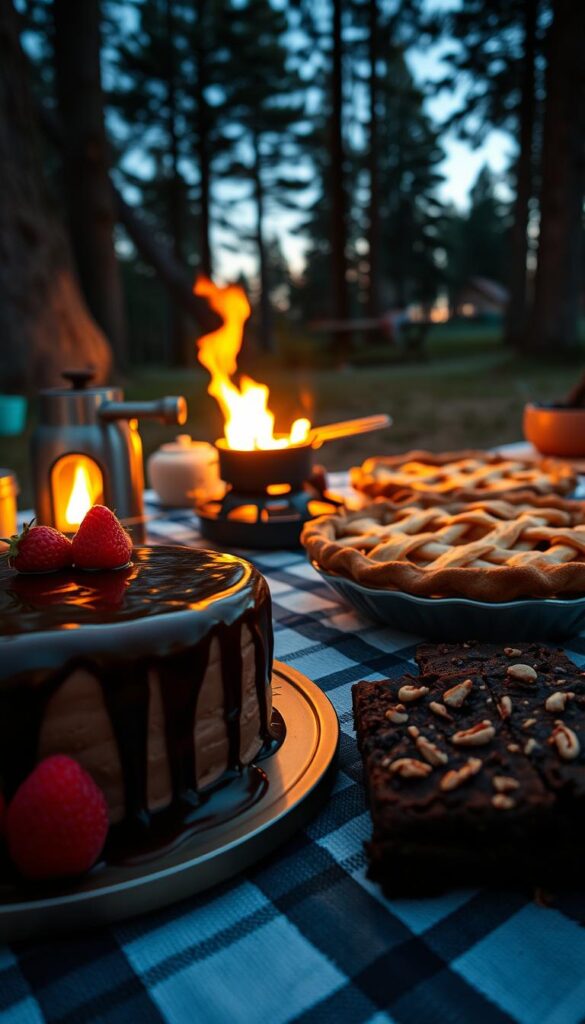
Finish dinner with a simple skillet dessert that bakes over coals in minutes.
Campfire apple crisp is easy to assemble in a skillet: toss sliced apples with cinnamon, a touch of sugar, and a handful of oats. Pack the mix and a small cup for topping nuts or coconut flakes. Bake over coals, rotate the pan, and add a splash of water to tame hot spots so the edges don’t scorch.
Quick hits and travel-friendly bars
Swap in plant-based marshmallows and chocolate for classic s’mores so everyone can join the ritual. Bake Mexican chocolate brownies or lunchbox chocolate chip cookies at home and store airtight. Add a peanut butter swirl to brownies for richness with no extra time.
- Pre-slice bars for fast service and neat plates.
- Bring a small cup to portion chopped nuts, coconut, or cashew “cheese” cream for a fancy finish.
- Time desserts to the fire: start sweets as mains finish so everything lands together.
| Dessert | Prep | Finish on Site |
|---|---|---|
| Campfire apple crisp | Slice apples; mix oats & spices | Skillet over coals, 10–15 minutes |
| Vegan s’mores | Pack plant-based marshmallows & chocolate | Assemble & toast at the fire in minutes |
| Brownies / cookies | Bake and store airtight | Serve cold or warm; add toppings |
“A small prep step at home turns simple ingredients into memorable desserts by the fire.”
vegan camping recipes: Your Go-To List for Breakfast, Lunch, Dinner, and Dessert
Choose a handful of crowd-pleasing dishes that share ingredients so you carry less and cook more efficiently.
Breakfast ideas that warm fast: oatmeal packets, chickpea flour scrambles, grits with potatoes and onions, and apple pie quinoa porridge. Pack single-serve pouches so you boil one pot and eat quickly.
Lunch options to assemble in minutes: chickpea salad wraps, carrot dogs on the grill, and fresh salad combos like pineapple-cucumber or classic potato salad. Keep dressings separate to preserve crunch.
Dinner choices for comfort: lentil or chickpea Bolognese with oil-free marinara, tortilla soup, chili over campfire-baked potatoes, and fajitas with peppers and onions. Add sides such as grilled corn and zucchini-portobello skillets to round plates.
Snacks & Desserts—peanut butter granola bars, bliss balls, campfire popcorn, vegan s’mores, campfire apple crisp, brownies, and chocolate chip cookies travel well and keep energy steady.
Tips: Pack a sauce kit with oil-free marinara, peanut sauce, and pickled onions. Map meals by day to use perishables first and rely on frozen or shelf-stable items later. Tailor portions to group size and trip length so you don’t overpack.
| Meal | Top Picks | Pack/Finish |
|---|---|---|
| Breakfast | Oatmeal packets, chickpea scramble | Pre-mix pouches, hot water |
| Lunch | Chickpea wraps, carrot dogs, salads | Prep fillings, assemble fresh |
| Dinner | Lentil Bolognese, chili, fajitas | Batch-cook sauce, warm on site |
| Dessert/Snack | Granola bars, s’mores, apple crisp | Bake ahead, serve warm or cold |
“Plan by ingredients, not by recipes, and you’ll cut weight while keeping variety.”
Conclusion
With a little planning, you can turn meal duty into one of the easiest parts of any outdoor trip.
You now have a full plan—from prep-at-home tricks to fast, reliable campsite cooking that covers breakfast through dessert. Freeze small portions, pre-chop vegetables, and label containers to save serious time.
Stay flexible: choose dishes that work on a stove, a grill, or over coals. Budget water for cooking and cleanup, and carry a filter or extra water so hydration stays simple.
Streamline gear, lean on proven pairings like chickpeas with marinara and potato scrambles, and finish nights with a shared dessert and warm drink. These steps make future trips easier and more enjoyable for everyone on the trip.