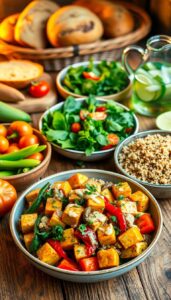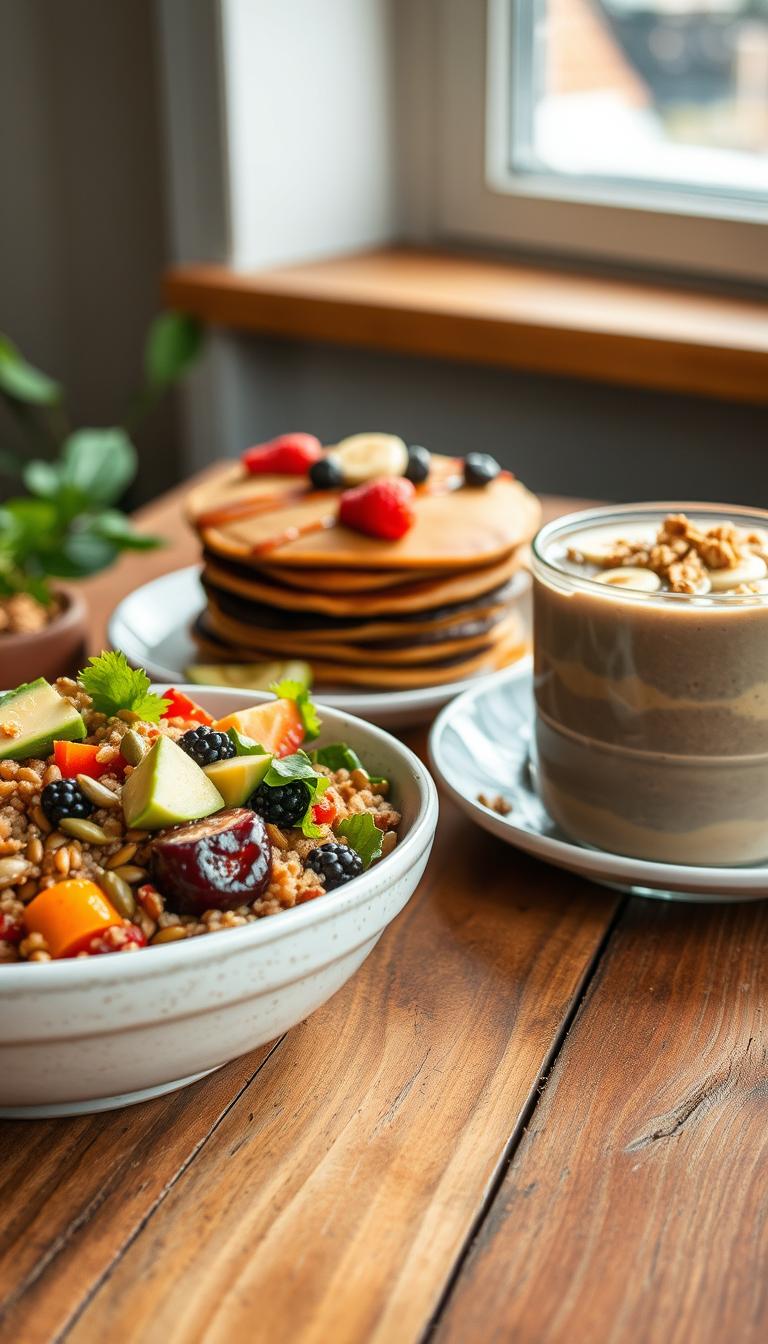
Can you really build muscle and keep energy high on a plant-based plan without guessing your macros?
You’ll get clear, evidence-backed targets for protein and calories so you can train hard and recover reliably. This guide shows how to turn common plant food into high-protein meals that taste great and support strength.
Protein supports lean mass growth and appetite control, so we outline practical ranges and timing to keep amino acids available across 4–6 feedings. You’ll learn how to combine complete and complementary proteins and include fortified foods and supplements to protect long-term health.
Expect meal templates, easy swaps, and time-saving prep systems that fit your workout schedule. By the end, you’ll know how to hit macros, boost energy, and avoid common pitfalls like too few calories or protein.
Key Takeaways
- Use evidence-based protein targets to build muscle and support recovery.
- Distribute protein across the day for steady amino availability.
- Turn staples like tofu, legumes, and quinoa into high-protein meals.
- Prioritize fortified foods and smart supplements to fill micronutrient gaps.
- Adopt simple prep systems and swaps to save time and keep energy up.
Why You’ll Love These Vegan Bodybuilder Recipes Right Now
You can turn common pantry staples into meals that support lean mass and steady energy.
Higher-protein plant meals reduce appetite and cravings while helping you meet daily targets for training and recovery.
Plan 4–6 eating occasions to spread protein and calories across the day. This keeps amino acids available and supports better performance.
Many staples—tofu, tempeh, seitan, legumes, quinoa, and soy yogurt—offer robust protein per serving. Use fortified foods to support long-term health and micronutrient needs.
- Plug-and-play meals that taste great and help you hit protein targets.
- Meals designed to fuel workouts with steady calories and recovery support.
- Simple bowls, snacks, and swaps to reduce decision fatigue and boost variety.
| Staple | Protein / Serving | Approx. Calories |
|---|---|---|
| Tofu (100g) | 8–12 g | 70–120 |
| Tempeh (100g) | 18–20 g | 190–210 |
| Quinoa (1 cup cooked) | 8 g | 220 |
| Cooked Lentils (1 cup) | 18 g | 230 |
How Much Protein You Need on a Vegan Diet for Muscle
Start by calculating protein per kilogram of body weight to match your activity and goals. For most active adults, a sensible range is 0.8–1.6 grams per kilogram daily. Sports nutritionists often cite an athletic ceiling near 2.0 g/kg during intense training or cutting phases.
Targets and distribution
Set a daily protein target using the 0.8–1.6 g/kg range and nudge toward 2.0 g/kg for heavy workload. Then split that total into 4–6 meals to keep amino acids available and boost muscle protein synthesis.
Pairing and timing
Pair each protein serving with complex carbs like brown rice, oats, or quinoa to refill glycogen and support workout performance. Use simple math to convert grams into portions so you know how many grams per plate.
- Quick rule: Multiply your weight (kg) by 1.2 as a starting target and adjust up during high-volume blocks.
- Balance protein with fiber and fluids to help digestion and satiety.
- Prioritize consistent timing—regular feedings matter more than chasing a single perfect window.
| Example | Weight (kg) | Target (g/day) |
|---|---|---|
| Moderate | 70 | 56–112 |
| Athletic ceiling | 70 | ~140 |
| Meal split | 70 | 4–6 feedings of 12–35 g |
Complete Protein on Plants: Covering Your Essential Amino Acids
Focus on a few reliable protein anchors and simple pairings to ensure all essential amino acids are present daily.
Many plant proteins are incomplete on their own, but you don’t need to overthink each plate. Variety across the day covers gaps and keeps training support consistent.
Make soy foods (tofu, tempeh, edamame), seitan, quinoa, and legume-plus-grain combos the backbone of your meals. These options act as practical vegan protein sources you can rotate.
- You’ll use quinoa and soy as convenient complete-protein anchors in your weekly rotation.
- Mix beans with whole grains — rice, oats, or barley — to improve amino acid profiles without fuss.
- Fortified soy milk and nutritional yeast add protein and B vitamins when you need a quick boost.
- Total daily variety matters more than making every single meal “perfect.”
Practical pairings: chickpeas + brown rice, lentils + oats, tempeh + quinoa, or seitan with whole-grain pasta. These combinations keep your protein quality high while matching training needs.
Choose pantry staples that fit your taste so the plan is sustainable. With consistent portions and simple swaps you’ll protect full amino acid coverage on a vegan diet without extra stress.
High-Protein Vegan Breakfasts to Start Strong
Kick off your day with breakfasts that pack serious protein and save time on busy mornings.
Tofu scramble with veggies and oats on the side
Make a savory tofu scramble that delivers about 24 grams of protein per serving. Add mixed vegetables for vitamins and fiber. Use minimal oil and a simple spice blend to keep flavors bright.
Overnight oats or protein pancakes with pea or soy protein
Mix pea or soy protein powder into overnight oats or batter for pancakes. A vanilla chai smoothie with protein powder can reach ~31 grams, so blend for a quick, complete meal.
Breakfast muesli and soy yogurt parfaits
Soy yogurt parfaits or protein muesli can hit ~30 grams when you add hemp or chia and fortified soy products. Rotate toppings to keep mornings interesting.
Breakfast sandwich with a seared “tofu egg”
Assemble a portable sandwich with seared tofu for iron and calcium. Aim for 25–30 grams per meal and batch-cook components to simplify weekdays.
- Use nut or seed butter for extra calories when training is heavy.
- Lean on soy milk smoothies as a complete protein source.
- Adjust portions by hunger and training demands.
| Breakfast | Typical Protein | Key Add-ins |
|---|---|---|
| Tofu scramble + oats | ~24 grams | Mixed veggies, minimal oil |
| Protein pancakes / overnight oats | 25–31 grams | Pea/soy protein powder, chia |
| Soy yogurt parfait / muesli | ~30 grams | Hemp, fortified soy |
| Tofu breakfast sandwich | 25–30 grams | Seared tofu, whole-grain bread |
Lunch Power Bowls That Build Muscle
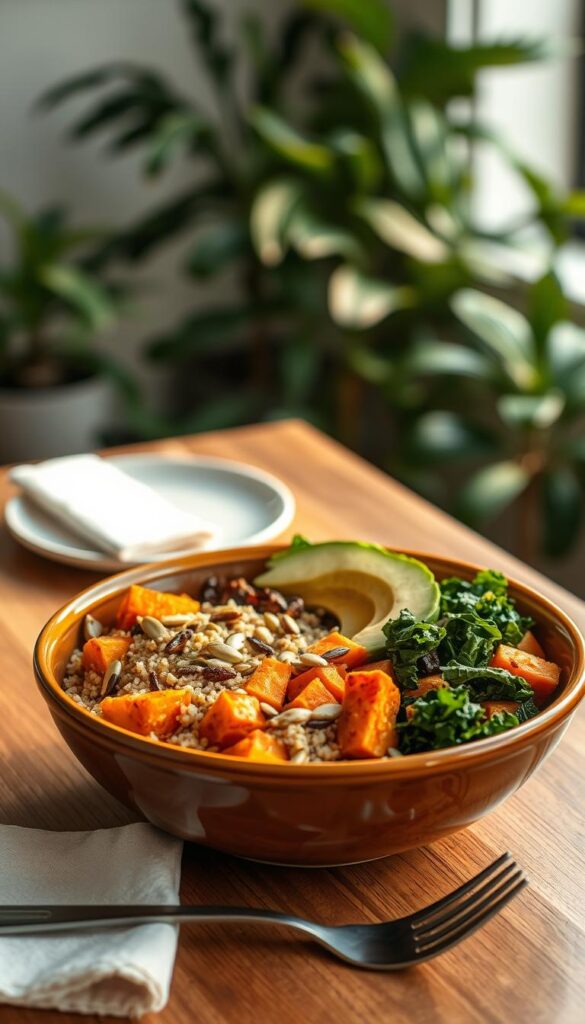
Assemble balanced bowls to turn simple ingredients into a high-protein meal that fuels afternoon sessions.
Chickpea‑quinoa power bowl: Combine cooked quinoa and roasted chickpeas, add edamame for extra protein, and pile on colorful vegetables. This pairing gives you a complete protein profile and about 25–35 grams per bowl when portioned right.
Chickpea‑quinoa bowls with roasted vegetables and edamame
Roast carrots, peppers, and broccoli so they reheat well. Toss with lemon, smoked paprika, and a light olive oil drizzle.
Tempeh Buddha bowls with tahini
Cube and sear tempeh, then dress with a tahini sauce to boost calories and minerals. Add spinach, roasted sweet potato, and a scoop of brown rice when you need more carbs for training.
Black bean burrito bowls with tofu
Mix black beans and pan-fried tofu, add salsa, greens, and a small avocado. This bowl provides iron, complex carbs, and higher protein for heavy training days.
- Pick ingredients that roast and reheat well to streamline weekly lunches.
- Use light peanut or tahini sauce variations to keep flavor high and control calories.
- Season bowls with spices and citrus to lift taste without extra sodium.
- Portion ahead to aim for ~25–35 g of protein per bowl and scale with nuts or avocado.
“Build bowls that match your training—simple swaps shift calories and protein quickly.”
Dinner Mains for Strength and Recovery
Finish the day with a plate that restores energy and supplies steady amino acids for overnight repair.
You’ll pan-fry tofu until golden, toss in colorful vegetables, and serve over brown rice with sliced avocado. This combo gives essential amino acids, complex carbs, and healthy fats for recovery.
Tempeh stir-fry with soba noodles
Stir-fry tempeh with broccoli and mushrooms, then toss with soba and a light tamari‑sesame sauce. The tempeh provides a complete protein source and the soba gives slow‑digesting carbs to refill glycogen.
Lentil chili or lentil meatballs over whole‑grain pasta
Simmer a hearty lentil chili or bake lentil meatballs to serve over whole‑grain pasta. Expect about 20–24 grams of protein per serving when portioned for performance, and batch-cook for easy next‑day lunches.
- You’ll target dinners that reliably deliver 25–35 grams of protein with steady carbs.
- You’ll leverage quick marinades and light sauces to deepen flavor without excess sodium or sugar.
- You’ll add bright vegetables for antioxidants that support health and recovery.
- You’ll rotate tofu, tempeh, and legumes across the week to keep your diet flexible.
“Aim for simple techniques—pan‑frying, one‑pot simmering, and light sauces—to save time and preserve nutrients.”
Comfort Classics: Burgers, Tacos, Chili and Quesadillas
Comfort food can still hit your macros—if you build it with protein-first ingredients and smart sides.
Beyond-style burgers are an easy anchor. One patty can provide about 30 grams of protein and balanced macros. Pair it with whole-grain buns, crisp greens, and a lighter sauce to control calories and sodium.
Beyond-style burgers with balanced macros
Stack patties with tomato, pickles, and a yogurt-style dressing or mustard to keep flavor high and sauce light.
Adjust toppings and sides to manage weight targets while keeping protein strong.
High-protein tacos and burrito bowls
Two tacos made with plant meat, soyrizo, or black beans can reach ~30 grams of protein. Add brown rice, avocado, and pico for fiber and steady energy.
Hearty chili you can meal prep
Make a large pot of chili using plant meat and beans. A large serving delivers roughly 24 grams of protein and reheats well for lunches.
Use low-sodium tomato base and fresh herbs to lift flavor without extra salt.
- Build burgers, tacos, and chili to hit ~24–30 g protein per serving.
- Include beans and whole grains for fiber and satiety.
- Lean on lighter sauces and crisp veg garnishes to keep calories in check.
- Prep batches so classic comfort is a quick reheat away.
| Dish | Protein / Serving | Notes |
|---|---|---|
| Beyond-style burger (1 patty) | ~30 g | Whole-grain bun, light sauce, veggies control calories |
| Two tacos (plant meat or beans) | ~30 g | Serve with brown rice or salad base for extra carbs |
| Large chili serving | ~24 g | Batch-cook, low-sodium tomato base, adds fiber |
Pasta and Noodle Dishes for Carbs and Protein
Swap traditional wheat noodles for legume-based pasta to push a plate above 30 grams of protein without relying on meat alternatives. Pair these pastas with bright pesto or vegetable-forward sauces for fiber and micronutrients.
Tamari-seared tofu tossed with buckwheat soba is an umami-forward way to combine a complete protein source with slow-digesting carbs. Keep ingredients simple: garlic, sesame or olive oil, citrus, and fresh herbs.
How to build the dish
- Use chickpea or lentil pasta to reach ~25–30+ grams protein per plate.
- Pair with pesto or a chunky vegetable sauce to add texture and vitamins.
- Pan-sear tofu and toss with soba and tamari for a savory alternative.
- Add mushrooms, spinach, or broccoli to boost color and satiety.
| Base | Typical Protein / Serving | Notes |
|---|---|---|
| Chickpea pasta (2 cups cooked) | 25–30 grams | Pairs well with pesto, low additional calories |
| Lentil or quinoa pasta (2 cups cooked) | 24–32 grams | High protein source; add veg for fiber |
| Buckwheat soba + pan-seared tofu | 20–28 grams | Slow-digesting carbs and tofu adds complete protein |
Batch-cook noodles and sauces to save time. Monitor portion sizes so carbs and total calories fit your training day. Adjust add-ins to hit clear protein targets and to keep pasta night fast and performance-friendly.
Snack Smarter: Protein-Dense Bites for All-Day Energy
Choose compact bites that deliver protein and steady energy when hunger hits. Keep options ready so you avoid overeating or low-energy slumps between meals.
By FDA standards, snacks with ≥10 grams of protein per serving qualify as high-protein. Stock edamame, soy yogurt parfaits, and rice cakes topped with peanut or almond butter for fast coverage.
Edamame, hummus plates, and nut-butter rice cakes
Pack small containers of hummus and sliced veggies for a quick plate. Top rice cakes with nut butter and banana for a balanced bite that pairs carbs and fat with protein.
DIY protein bars and chocolate coconut slices
Batch prep homemade bars using oats, dates, nut butter, and protein powder. Controlling the ingredients helps you manage calories and keep weight goals on track.
Matcha “fat bombs” for satiation and energy
Matcha fat bombs give a small caffeine lift plus fats to curb appetite. Use them for compact fuel before short sessions or long meetings.
- Keep ready-to-grab protein shakes for post-training top-ups.
- Choose snacks with at least 10 g protein and match portions to your weight targets.
- Pre-portion servings so weekday snacking is frictionless and on-plan.
- Vary flavors—cocoa, cinnamon, and coconut—to keep snacks interesting.
Smoothies & Shakes that Deliver Essential Amino Acids
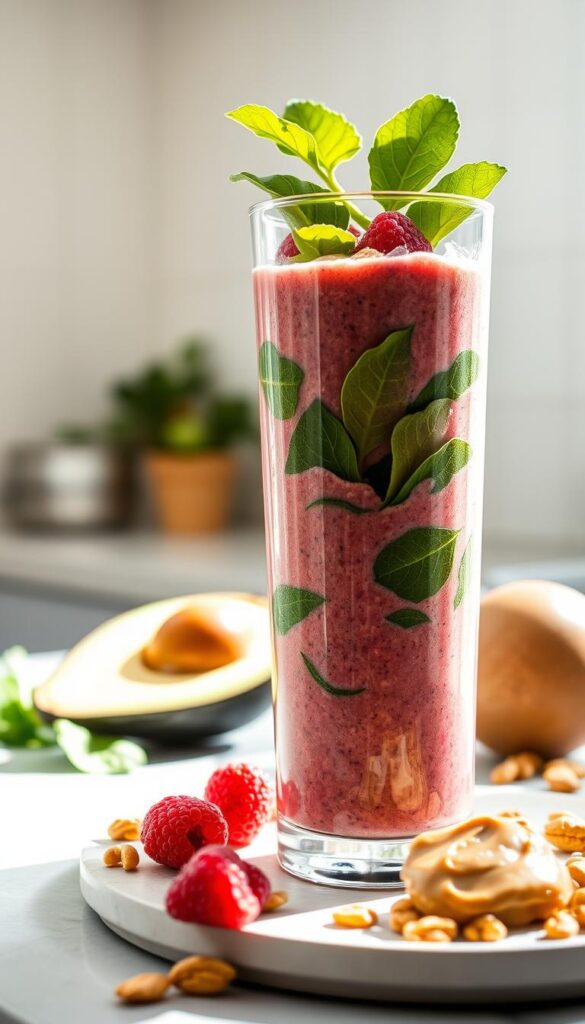
A well-built shake can act as a compact meal that supports muscle repair and steady energy. Use fortified soy milk or a blended plant milk as the base to boost complete protein and calcium.
Vanilla chai or berry soy smoothies mixed with protein powder hit reliable targets. A vanilla chai shake using soy milk and a scoop can provide about 31 grams of protein per serving. Fruits add antioxidants while the powder supplies rapid amino acids.
Spinach + peanut butter for iron and calories
Blend baby spinach, a tablespoon of peanut butter, frozen banana, and your choice of milk for extra calories and healthy fats. Add hemp seeds to lift omega-3s and to round out essential amino coverage.
Tropical blends with hemp and silken tofu
Mango, pineapple, and hemp seeds create a creamy texture and bright antioxidants. Optionally add silken tofu for an ultra-smooth mouthfeel and an extra protein lift that keeps the shake satisfying like a meal.
- Timing: Drink around training for quick amino acids and easy digestion.
- Protein sources: Rotate soy, pea, or blended vegan protein powders to improve amino profiles.
- Adjust: Change scoop size or milk choice to alter grams of protein and total calories to match your weight goals.
- Prep tip: Freeze fruit packs so you can blend a consistent, grab-and-go shake fast.
| Shake | Protein (approx.) | Key add-ins |
|---|---|---|
| Vanilla chai + soy milk + powder | ~31 grams | Frozen berries, cinnamon, fortified soy milk |
| Spinach + peanut butter + hemp | 20–28 grams (depending on powder) | Spinach, peanut butter, hemp seeds, banana |
| Tropical mango + silken tofu | 18–30 grams | Mango, pineapple, hemp, silken tofu |
Vegetable-Forward Dishes That Still Hit Your Protein
Vegetable-forward plates can add volume and nutrients without stealing the spotlight from your protein sources. Use bold spices, citrus, and smart pairings so vegetables boost recovery and flavor while your main protein remains central.
Aloo gobi as a fiber-rich side with protein mains
Aloo gobi combines potatoes and cauliflower with warming spices for a fiber-rich, nutrient-dense side. Pair it with a protein main—grilled tempeh, lentil stew, or seared tofu—to keep overall recovery strong.
This vegetable-forward dish adds volume and micronutrients so you eat fewer empty calories. It reheats well and scales for batch cooking on busy nights.
Simple tempeh salad with sesame and greens
Make a quick tempeh salad by cubing and searing tempeh, tossing it with mixed greens, shredded carrots, and sesame. Tempeh is a whole soy source of complete amino acids and brings calcium when paired with sesame.
Add beans or lentils if you want extra iron and protein. Dress with lemon, tamari, and toasted sesame seeds to keep sodium modest and flavors bright.
- You’ll pair aloo gobi with a protein main to hold fiber high and recovery steady.
- You’ll toss tempeh with sesame and greens for a complete lunch or dinner dish.
- You’ll use colorful vegetables to maximize vitamins, minerals, and phytonutrients.
- You’ll scale portions so vegetables don’t crowd out your protein anchor.
- You’ll batch-cook both options for easy weeknight health wins.
Foods to Prioritize on a Vegan Bodybuilding Diet
Choose core ingredients that make hitting grams of protein each day simple and repeatable. Focus on foods that double as a reliable protein source and steady carbs so training days are easy to fuel.
Legumes, soy, seitan, and whole grains
Center meals on legumes—beans, lentils, and chickpeas—for bulk protein and fiber. Add soy foods like tofu, tempeh, and edamame as dependable protein sources.
Include seitan and quinoa to raise the protein per plate. Use oats, brown rice, and whole grains for steady carbohydrate calories that support workouts.
Nuts, seeds, fortified milks, and yeast
Use nuts, seeds, and nut butters to add calorie-dense fats when you need a surplus.
Rely on fortified plant milks and nutritional yeast to boost B12, calcium, and vitamin D—key micronutrients in a plant-forward eating plan.
- You’ll track grams from primary sources so your daily protein target stays non-negotiable.
- You’ll rotate beans and grains to diversify nutrients and ease digestion.
- You’ll align portions to training cycles—more carbs and calories on heavy days.
- You’ll keep flavor high with herbs, spices, citrus, and umami boosters.
“Make whole foods the backbone of your grocery list—reliable sources simplify tracking and support consistent weight and performance goals.”
Foods to Limit for Better Body Composition
What you leave off the plate matters: some popular processed choices quietly add calories and sodium. Small, consistent swaps help your body preserve muscle and lose excess fat without sacrificing flavor.
Highly processed snacks, refined sugars, and fried foods
Limit ultra-processed snacks and sweets that pack quick energy but few nutrients. These items inflate daily calorie totals and can wreck recovery when they replace protein-rich choices.
Reduce: candy, sweetened bars, deep-fried takeout, and sugary sauces that hide added sugar.
Sodium-heavy substitutes and low-nutrient oils
Many mock meats and ready-made products are high in sodium. They can displace more nutritious staples and hinder body composition goals.
Also moderate refined oils. They add energy but little micronutrient value. Prefer whole-food fats like nuts, seeds, and avocado when possible.
- You’ll reduce ultra-processed items and refined sugars that drive excess calories without supporting recovery.
- You’ll be cautious with fried foods and sodium-heavy mock meats that can undermine body composition goals.
- You’ll watch sauces for hidden sugars and sodium, swapping in herbs, citrus, and spice when possible.
- You’ll read labels to control calorie density and sodium across your day.
- You’ll choose minimally processed snacks to protect long-term health and performance.
“Reserve indulgences for planned moments so they don’t displace your protein anchors.”
Vegan Bodybuilder Recipes
Plan a simple weekly rotation that makes hitting protein targets predictable and boring—in a good way.
Pick 4–6 anchors for the week: tofu, tempeh, seitan, legumes, and protein pasta. Batch-cook proteins and grains so assembly takes minutes. This approach keeps each meal near 25–35 grams when portions are standard.
How to map your week
- Map dinners and quick lunches separately to cut decision fatigue.
- Standardize portions so each recipe lands in your target grams range.
- Pair beans with whole grains or soy to ensure complete amino coverage.
- Use lentil or chickpea pasta and edamame as vegan protein add-ins when totals need a bump.
- Keep one freezer-friendly dish as backup and swap sauces to vary flavor without changing macros.
| Anchor | Typical Protein / Serving | Prep Tip |
|---|---|---|
| Tofu | 18–24 grams | Press, marinate, batch-bake |
| Tempeh / Seitan | 18–30 grams | Cube and sear for bowls |
| Legumes & Protein Pasta | 20–30+ grams | Cook once, portion for week |
“Rotate anchors, standardize portions, and use meal blocks to stay consistent with training.”
Meal Prep Tips: Your Shortcut to Consistent Gains
Prep once, then assemble bowls, wraps, and shakes in minutes to stay consistent with training and recovery.
Cook proteins and grains in bulk, portion, and freeze
Batch-cook tofu, lentils, tempeh, quinoa, brown rice, and oats so you have ready anchors for fast meals. Portion into single-serving containers and freeze extras to avoid poor choices when time is tight.
Pre-measure snacks and protein powder for grab-and-go
Measure nuts, dried fruit, and your protein powder into small bags so shakes and snacks are accurate. This makes post-workout fueling effortless and keeps calories consistent with your plan.
Rotate legumes and grains to diversify amino acids
Swap chickpeas, black beans, lentils, and different grains across the week to broaden micronutrients. Keep core ingredients on hand so you can quickly assemble a balanced bowl or wrap.
- Label portions to match calories and protein targets.
- Set a weekly prep cadence that fits your training blocks.
- Use spice blends, citrus, and herbs to keep flavors fresh.
- Track what works and tweak portion sizes over time.
“Prep simplifies adherence: reliable meals make consistent gains repeatable.”
Micronutrients That Matter for Plant-Based Athletes
Small shortfalls in micronutrients can reduce energy, blunt recovery, and affect weight and performance even when protein and calories are adequate.
Prioritize a short checklist of vitamins and minerals and use fortified foods or targeted supplements to simplify coverage.
B12, iron, zinc
You’ll prioritize B12 via fortified foods or a supplement, since reliable plant sources are rare.
Cover iron and zinc with legumes, seeds, and nutritional yeast, and monitor blood levels if training hard.
Calcium, vitamin D, iodine
Get calcium and vitamin D from fortified milks and sunlight, or supplement when exposure is limited.
Use iodized salt or small portions of seaweed to secure iodine for thyroid and metabolic health.
Omega-3s and interactions
Include ALA sources like flax, chia, and walnuts. Consider an algae-based DHA/EPA supplement when you need direct long-chain acids for recovery and cognitive support.
Understand that iron absorption and zinc can be affected by phytates; pairing vitamin C with legumes helps.
Practical checklist:
- Prioritize fortified source options for B12, calcium, and vitamin D.
- Rotate legumes, seeds, and nutritional yeast for iron and zinc.
- Add flax or chia daily; consider algae-based DHA/EPA if you train often.
- Track energy, sleep, and performance as early signs of shortfalls.
- Consult a registered dietitian for lab-confirmed deficiencies and tailored dosing.
| Nutrient | Reliable Sources | Notes for Athletes |
|---|---|---|
| B12 | Fortified plant milks, nutritional yeast, supplement | Supplement or fortified foods recommended; test annually |
| Iron & Zinc | Legumes, pumpkin seeds, nutritional yeast | Pair with vitamin C; monitor ferritin when training heavy |
| Calcium & Vitamin D | Fortified milks, mushrooms (D), supplements | Supplement in low sun months; support bone and recovery |
| Iodine | Iodized salt, nori or kelp (small amounts) | Use controlled seaweed portions to avoid excess |
| Omega-3s | Flax, chia, walnuts; algae DHA/EPA | ALA daily; consider algae-based DHA/EPA for direct support |
“Fortified foods plus a few targeted supplements make micronutrient coverage straightforward while you focus on protein and training.”
Conclusion
Wrap up your plan with a simple framework that aligns meals, grams, and workouts. Set a clear protein target (use the 0.8–1.6 g/kg range, up toward ~2.0 g/kg for intense blocks) and match calories to your goal—surplus for gains, maintenance for steady progress.
Rely on a weekly rotation of soy, seitan, legumes, grains, and fortified products so building muscle becomes predictable. Use vegan meal templates to simplify grocery shopping, cooking, and post-workout recovery.
Cover B12, iron, calcium, iodine, vitamin D, and omega-3s with fortified food, targeted supplements, and simple swaps. Track strength, body composition, and energy and refine portions over time so training and nutrition compound your results.