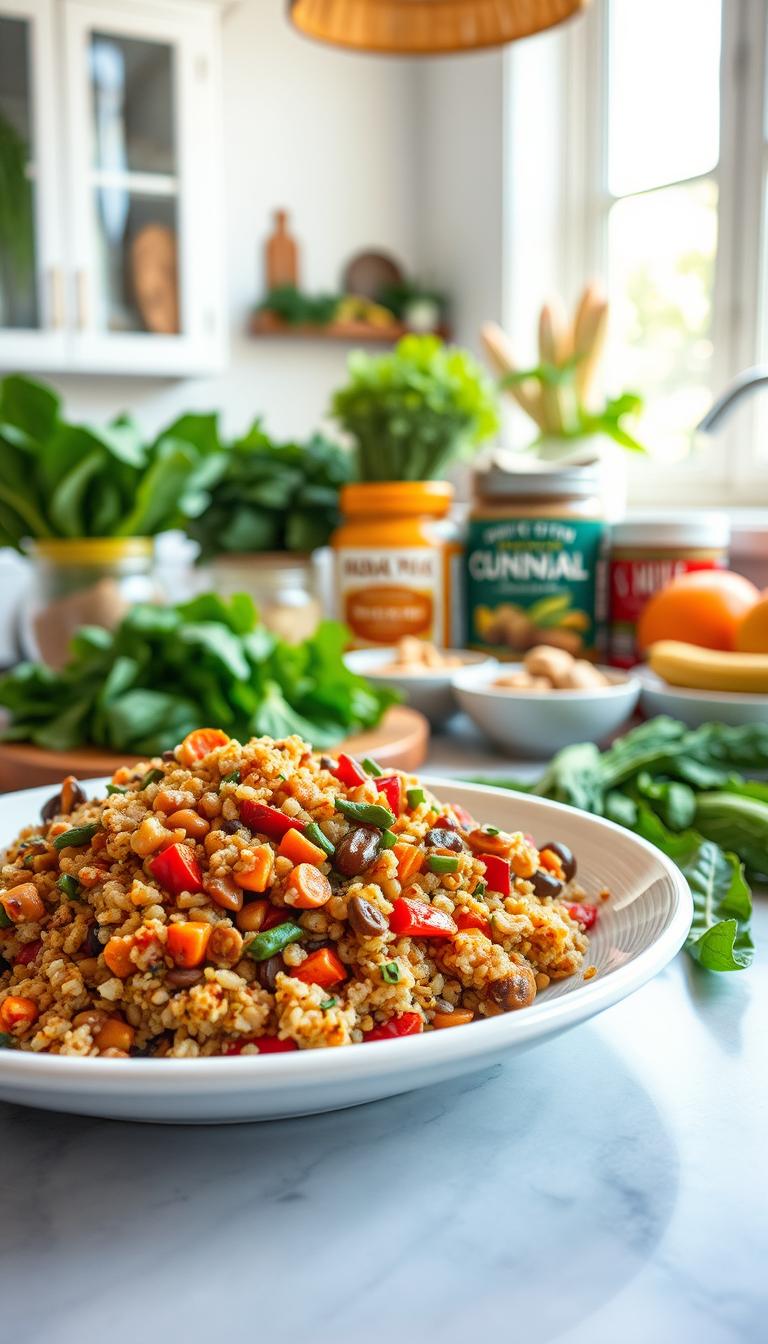
Curious if you can build serious strength on a plant-forward plan without endless supplements?
You’ll get a clear, practical roadmap to add steady weight while protecting your health. Start with a modest 250–500 calorie daily surplus and increase only if your weight stalls longer than two weeks.
Target about 0.7 grams of protein per pound of body weight to maximize growth, and learn to hit that with normal meals like oatmeal, lentil stew, and smoothies. Smoothies and soy milk make it easy to add calories and protein without feeling overfull.
This section helps you plan portions, structure meals, and use batch cooking so your progress stays consistent. Expect simple, familiar foods and tips that keep your training and recovery on track during the journey.
Key Takeaways
- Begin with a 250–500 calorie daily surplus for steady weight increase.
- Aim for ~0.7 g protein per pound of body weight to support growth.
- Use smoothies and soy milk to add calories and protein efficiently.
- Plan meals and batch cook to stay consistent without stress.
- Focus on whole foods like oats, legumes, and soy products for lasting health.
Your path to muscle on a vegan diet starts in the kitchen
Make the kitchen your training partner: small tweaks to portions and snacks move the needle fast.
You’ll raise calories without upending your routine by making meals slightly larger and adding one extra snack each day. Keep familiar foods and change one meal at a time so your digestion adapts.
Add soy or oat milk to smoothies, oatmeal, or a cup with lunch to boost protein and calories easily. A post-workout shake is another simple win.
“Small, consistent changes beat big, short-lived overhauls every time.”
- Focus on grains, legumes, soy foods, nuts, and seeds for dense nutrition and steady protein.
- Monitor your weight weekly and nudge calories up or down to keep progress steady.
- Stock pantry add-ons like nut butter, olive oil, and dried fruit for quick calorie boosts.
| Quick Change | Effect | How to Repeat |
|---|---|---|
| Larger portions | +100–200 calories | Double oats or rice on training days |
| One snack | +200–300 calories | Trail mix or energy ball mid-afternoon |
| Milk swap | +50–150 calories & protein | Use soy/oat milk with smoothies and meals |
Take this way of steady change and build a pattern you can keep. Small steps protect recovery, performance, and long-term health.
How to build muscle on plants: calories, protein, and consistency
Begin by adding a manageable number of calories each day to fuel training and recovery.
Set your surplus: add 250–500 calories per day to start. Track your weight weekly. If progress stalls for two weeks, add ~200 more calories. This keeps weight increases steady and predictable.
Hit your protein target: aim for about 0.7 grams of protein per pound of body weight daily. Spread protein across meals to boost muscle protein synthesis and support muscle growth and recovery.
“Start small, stay consistent, and use whole foods to make each meal count.”
- Use calorie-dense add-ons (olive oil, nut butter) to raise intake without bulky portions.
- Keep carbs and fat balanced so training energy and digestion stay reliable.
- Lean on oats, soy milk, legumes, and peanut butter for easy calories and protein.
Complete proteins and amino acids without animal foods
Combine simple plant staples to cover every essential amino acid across your day.
Most plant proteins are low in one or more amino acids on their own. You don’t need animal products to get a complete profile. Instead, mix grains and legumes across meals so your body sees every required amino acid.
Soy foods are a convenient exception. Tofu, tempeh, and soy milk are complete protein sources and work well at each meal. They cut the need for careful pairing when you want a single high-quality serving.
When you prefer shakes, pea‑rice blends fill gaps fast. A blend improves the amino pattern versus single‑source powders. Practical options include NOW Pea Protein or Birdman pea‑rice blends for a reliable, complete vegan protein supplement.
- Pair beans with brown rice or whole grains to supply all essential amino acids.
- Distribute protein across meals so each plate aids repair and recovery.
- Use simple swaps—edamame in a bowl or chickpeas in salads—to boost quality.
Smart carb and fat choices for energy and recovery
Quality carbs and healthy fats give steady energy and spare protein for repair. Use oats, whole-grain rice, and legumes to fuel workouts and refill glycogen.
Keep meals moist so eating a surplus is comfortable. Stews, sauces, and soy milk add texture and make extra calories easier to consume.
Add concentrated fats like olive oil, nuts, and seeds to increase calories with little volume. That helps you raise intake without feeling stuffed.
“Small add-ons—an extra drizzle of oil or a spoon of nut butter—bridge calorie gaps with minimal effort.”
- Choose fiber-rich carbs to support recovery and gut health.
- Pair carbs and fat with protein at each meal for balanced performance.
- Include non-starchy vegetables for micronutrients and low-calorie density.
| Choice | Benefit | Quick Serving |
|---|---|---|
| Oats / Brown rice / Legumes | Slow carbs, fiber, some protein | Bowl with soy milk or beans |
| Olive oil / Nuts / Seeds | Calorie-dense healthy fat | Drizzle or handful per meal |
| Non-starchy veg | Micronutrients, low calories | Side salad or steamed greens |
Adjust carb and fat ratios based on how you feel in the gym while keeping daily protein targets steady. Small weekly tweaks help keep weight and health moving in the right direction.
Protein powders and soy milk: when and how to use them
Use targeted powders and soy milk to bridge gaps, not replace whole meals.
Choose clean products: pick a protein powder tested by USP or NSF with a short ingredient list and no proprietary blends. Pea or pea‑rice blends (NOW Foods, Birdman) give a fuller amino profile and work well as a vegan protein source.
Post-workout shakes that actually help
Have a fast-digesting shake after training to deliver amino acids quickly. Keep servings modest and pair with a cup of unsweetened soy milk for roughly ~100 calories and ~8 grams of protein per cup.
“Powders are a tool, not a crutch—lean on whole foods for most of your nutrition.”
- Prefer third-party tested powders with simple labels.
- Use pea or pea‑rice blends for balanced amino acids.
- Limit powder use through the day to avoid excess calories.
- Blend with fruit, a handful of greens, and seeds to aid digestion.
| Item | Why use it | Quick note |
|---|---|---|
| Pea / Pea‑rice powder | Complete amino profile | Good mixability, NSF/USP preferred |
| Unsweetened soy milk | Adds calories & protein | ~100 calories, ~8 grams per cup |
| Whole-food meals | Main nutrition source | Prioritize at least 70% of daily protein |
Match timing to your appetite and track how you feel and perform. That way you refine choice, serving size, and timing for long-term health and progress.
Breakfast muscle builders: high-protein starts to your day
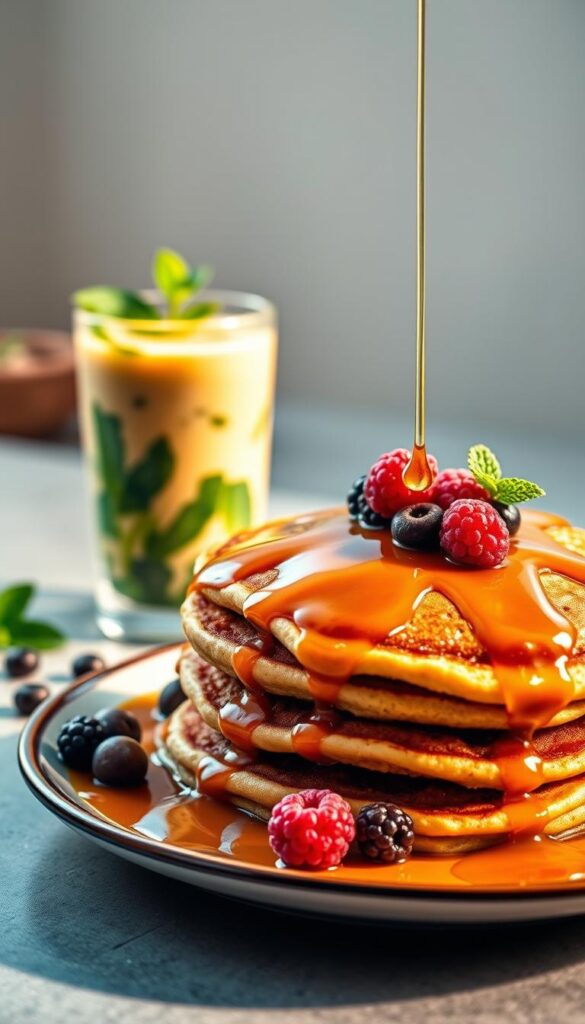
Start your day with a breakfast that delivers steady energy and a serious hit of protein. A focused morning meal helps training and recovery, and makes the rest of your daily targets easier to hit.
Bodybuilder oatmeal with soy milk, peaches, and protein powder
Why it works: 1 cup oats + 2 cups soy milk, diced peach, 1 tbsp syrup, 1 scoop protein powder, cinnamon, pinch of salt. This bowl is a high protein, high calorie start.
| Serving | Calories | Protein | Carbs | Fat |
|---|---|---|---|---|
| Bodybuilder oatmeal | ~750 kcal | ~50 g protein | 105 g carbs | 15 g fat |
“Combine oats and soy milk with a protein scoop to add dense calories without heavy volume.”
Tofu scramble loaded with veggies
Make a tofu scramble that mimics eggs. One serving packs about 24 grams protein and fits well with greens, peppers, and tomatoes.
- Add salsa or extra soy milk to keep it moist so eating a surplus feels easier.
- Batch-cook oats or scramble tofu on Sundays to simplify weekday meals.
- Adjust spices and sweetness to make this a breakfast you repeat.
Use these morning wins to build momentum. The right balance of carbs and protein fuels training and recovery for the rest of your day.
High-calorie smoothies that don’t overwhelm your stomach
A well-built shake delivers dense calories and easy-to-absorb protein so you stay on track. Keep servings modest and use familiar ingredients so the drink feels like a meal, not a chore.
Green bulking smoothie blueprint
Base formula: 1 banana, a handful fresh spinach, 1 tbsp almond butter, 1/2 cup frozen strawberries, 1 tbsp flax or chia, 225 ml soy milk, 1 scoop protein powder.
This simple blend hits ~500 calories and roughly ~40 grams protein while staying light on the stomach. Keep portions similar to normal meals to avoid bloating.
Vanilla chai protein smoothie variation
Swap in a frozen banana, 1 cup unsweetened milk, 1 scoop vanilla protein, a pinch of cinnamon and cardamom, and 1 tbsp nut butter. That version reaches ~31 grams protein depending on your powder.
“Use smoothies pre- or post-workout for fast energy and quick protein delivery.”
- Use this way to add calories without large portions.
- Fine-tune thickness with more or less liquid so it drinks fast.
- Prep frozen packs for quick grab-and-blend mornings.
| Smoothie | Est. calories | Est. grams protein |
|---|---|---|
| Green blueprint | ~500 | ~40 |
| Vanilla chai | ~420 | ~31 |
Vegan lunches with 25-30 grams protein for steady muscle growth
Keep lunches simple and portable so you hit daily protein targets without fuss. These meals are easy to pack, fast to eat, and built to deliver roughly 25–30 grams protein each.
Peanut butter banana whole-grain sandwich + soy milk
Build it: 2 slices whole-grain bread, 2 tbsp peanut butter, banana or jam. That sandwich is ~450 calories and ~20 g protein.
Add 1 cup unsweetened soy milk (~100 kcal, ~8 g protein) to reach ~28 grams protein with minimal prep.
Southwest stuffed sweet potato with plant protein
Roast a sweet potato and stuff with seasoned beans or a plant-based meat alternative. A typical serving hits ~25–26 grams protein.
Keep it moist with salsa or a yogurt-style sauce so your lunch is easy to eat while you maintain steady weight.
- These meals are portable and scaleable: add extra bread, nut butter, or an extra cup of soy milk to raise calories.
- Season generously with spices and herbs to keep flavors interesting across the week.
| Lunch | Est. calories | Est. grams protein |
|---|---|---|
| PB banana sandwich | ~450 kcal | ~20 g |
| + 1 cup soy milk | ~100 kcal | ~8 g |
| Southwest stuffed sweet potato (beans/Beyond Meat) | ~500 kcal | ~25–26 g |
Dinner winners: hearty, high-protein vegan meals
End your day with filling dinners that deliver steady protein and real calories. These plates are easy to batch-cook and simple to scale when you need more energy.
Red lentil stew with spinach and lime
Make a weeknight stew with olive oil, onion, garlic, dry red lentils, water, baby spinach, salt, pepper, and a squeeze of lime.
Per serving (serves 4): ~650 kcal and ~40 grams protein. Keep it slightly soupy so it’s easy to eat more when bulking.
Tip: Stir in 1 tbsp olive oil (+~120 calories) to raise energy without much volume.
Beyond Meat chili with brown rice
Cook a bold chili using Beyond Meat, beans, tomatoes, and spices. Ladle over brown rice to round out carbs and protein.
- Use beans for extra fiber and micronutrients.
- Season boldly and add hot sauce or herbs for variety.
Tempeh garlic-ginger soy bowl
Toss tempeh in a garlic-ginger soy glaze, serve with steamed greens and a scoop of rice or roasted veg.
Batch-cook these dinners so leftovers cover multiple nights. Garnish with lime, herbs, or chili flakes and pair with a small salad to support overall nutrition.
“Rotate hearty stews, chili, and tempeh bowls through the week to keep meals satisfying and protein consistent.”
| Dish | Key add | Quick note |
|---|---|---|
| Red lentil stew | Olive oil | ~650 kcal, ~40 grams protein per serving |
| Beyond Meat chili + rice | Beans | Balanced carbs + protein, easy to scale |
| Tempeh soy bowl | Garlic-ginger | Savory, batch-friendly, pairs with greens |
Bowls, tacos, and quesadillas for flexible weeknight meals
Quick templates let you eat well without hours of prep. These formats make it easy to balance protein, carbs, and healthy fat for training and recovery. They also scale from light to calorie-dense with a few simple swaps.
Grilled tofu bowl with nutty sauce
Build it: batch-grill seasoned tofu, add a grain or greens base, and drizzle a nutty tahini or almond sauce to add calories and flavor.
A typical grilled tofu bowl packs about 29 g protein per serving. Keep sauces minimally processed and use avocado or olive oil to tune fat and total calories.
Vegan tacos or quesadillas with black beans or soyrizo
Two filled tacos or a quesadilla with Beyond Meat, soyrizo, or black beans can reach ~30 g protein. Use whole-grain tortillas or a rice base to add carbs for workouts.
- Batch-grill tofu so you can reheat quickly on busy nights.
- Swap bases—greens, grains, or tortillas—to keep meals fresh.
- Season boldly with lime, cilantro, and pickled onions for craveable plates.
- Prioritize whole-food toppings and control fat in sauces to fine-tune calories.
| Dish | Est. protein | Quick tip |
|---|---|---|
| Grilled tofu bowl | ~29 g | Use nutty sauce to raise calories and flavor |
| Black bean tacos (2) | ~30 g | Top with avocado for healthy fat and extra energy |
| Soyrizo quesadilla | ~30 g | Choose minimal-ingredient tortillas and add greens |
“Keep the format repeatable: grill once, swap bases, and season boldly.”
Pasta night, powered by legumes and whole grains
Turn pasta night into a performance meal by swapping standard noodles for legume or whole-grain pasta. This simple switch boosts protein and fiber without changing the comfort you crave.
High-protein pasta with pesto and extra veggies
Why it works: Chickpea or lentil pasta can deliver 30+ grams protein per serving. Toss it with a light pesto, roasted zucchini, cherry tomatoes, and spinach for a balanced plate of carbs, protein, and micronutrients.
Vegan meatballs and spaghetti
Pair legume pasta with plant-based meatballs for a familiar comfort dinner that hits strong protein numbers. About three vegan meatballs often provide ~20 grams protein, so a serving plus high-protein pasta reaches your grams protein target at dinner.
- Choose whole grains or legume pastas to raise fiber and fullness.
- Keep sauces slightly loose so the meal is easy to eat in a surplus.
- Add olive oil or pine nuts to nudge calories up when needed.
- Brighten with herbs and citrus rather than excess salt.
- Batch-cook pasta and rotate sauces—pesto, tomato, or garlic‑oil—for variety.
“Small swaps—better pasta and a protein-forward topping—make pasta night both satisfying and functional.”
| Component | Benefit | Quick tip |
|---|---|---|
| Legume pasta (chickpea, lentil) | 30+ grams protein per serving | Check label for grams protein |
| Vegan meatballs (3) | ~20 grams protein | Warm in sauce to keep moist |
| Pesto + veg | Carbs, micronutrients, healthy fats | Keep sauce loose; add olive oil for calories |
Snack your way to your macro goals
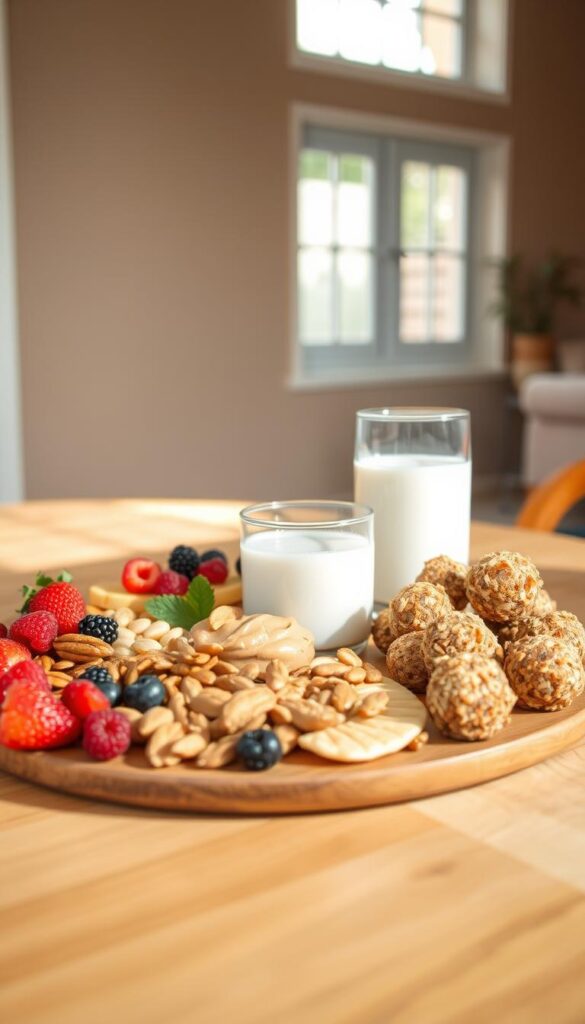
Smart snacks fill calorie gaps and keep your protein totals steady all day. Use small, planned bites to support training, recovery, and a steady weekly weight trend.
Energy balls: quick, dense, and portable
Prep tip: make a batch of about 15 energy balls on Sunday. Each ball is roughly 250 calories and delivers 10+ grams protein.
Store them for a week and grab one between meals or after a workout to close calorie gaps fast.
Trail mix with pumpkin seeds, peanuts, and soybeans
Mix pumpkin seeds, roasted peanuts, dry-roasted soybeans, and dried cherries for a chewy, crunchy snack.
A 150 g bag is roughly ~700 kcal and ~40 g protein — perfect when you need a big, high-protein bite.
Edamame, parfaits, and rice cakes with nut butter
Keep a rotation of quick options: steamed edamame, dairy-free yogurt parfaits with seeds, and rice cakes topped with nut butter.
These foods are easy to portion, travel well, and help you spread protein across the day without giant meals.
- Batch snacks on Sunday so you always have high-protein options ready.
- Use snacks strategically before or after training to aid recovery and energy.
- Monitor portions — calorie-dense snacks can push total intake too high if you’re not tracking.
- Choose minimally processed ingredients for better overall health.
“Keep textures varied—chewy, crunchy, creamy—so snacks stay satisfying day after day.”
Meal prep for gains: batch-cook and stay consistent
A single Sunday session can make every weekday meal effortless and on-target.
Sunday setup: stew, energy balls, and prepped grains
Cook a pot of lentil stew so a high-protein meal is always within reach. Roll a batch of energy balls to cover snacks all week.
Prep grains like brown rice and quinoa for fast bowls with beans or soy additions. Portion into containers so you can grab, heat, and eat without decision fatigue.
Flavor boosters: herbs, spices, and garnishes
Keep jars of chopped herbs, citrus wedges, and pickled onions to change the taste of base meals fast. A squeeze of lime or fresh cilantro makes reheated food feel new.
Scale batch sizes to match your calendar and appetite. Set a recurring grocery list so you always have the right ingredients for your calorie and protein targets.
“A short, focused prep session removes friction and keeps your weekly intake consistent.”
- Batch-cook core recipes like lentil stew for steady protein.
- Prep grains and beans for quick bowls with rice or soy additions.
- Portion meals, roll snacks, and keep a checklist for Sunday setup.
| Prep Item | Purpose | Quick Tip |
|---|---|---|
| Lentil stew | High-protein meals | Keep slightly soupy to eat more |
| Energy balls | Portable calories | Make 12–15 for the week |
| Brown rice / quinoa | Fast grain base | Portion into cups for bowls |
Use these small systems to simplify cooking, protect your time, and support long-term health. Keep a short checklist and your preferred protein sources on hand so hitting targets stays easy.
vegan muscle gain recipes for every part of your day
Create a flexible lineup of plates and snacks that keeps your intake steady through busy days. This simple blueprint helps you hit protein and calorie targets without complicated cooking.
Breakfast: oatmeal or scramble
Start with a high-protein bowl of oats mixed with soy milk and a scoop of powder, or a tofu scramble with veggies. Both options set an early protein tone so the rest of your day is easier to manage.
Lunch: bowls, sandwiches, or stuffed potatoes
Choose portable lunches like a PB sandwich plus soy milk, grain bowls with beans, or a stuffed sweet potato. They pack ~25–30 grams protein per serving when you size portions right.
Dinner: stews, pastas, and tofu/tempeh mains
Anchor evenings with red lentil stews, legume pasta, or marinated tofu/tempeh bowls. These dinners deliver big servings of protein and calories so you finish strong.
Snacks: shakes, energy balls, and trail mix
Use smoothies around training, energy balls between meals, and trail mix for long days. Track portions and read labels for exact grams of protein so your daily total stays on target during the journey.
“Build routines around times that already work for you — consistency beats perfection.”
A 3,000-calorie sample day with nearly 200 grams protein
A single, structured day can show you how to hit big calories and high protein without guessing. Below is a practical lineup you can repeat, scale, or swap to match your weight and performance goals.
Sample day (approx):
- Bodybuilder oatmeal — ~750 kcal, ~50 grams protein (breakfast)
- Green bulking smoothie — ~500 kcal, ~40 grams protein (mid-morning)
- PB sandwich + 1.5 cups soy milk — ~600–650 kcal, ~32 grams protein (lunch)
- 2 energy balls — ~500 kcal, ~20 grams protein (afternoon)
- Red lentil stew — ~650 kcal, ~40 grams protein (dinner)
Totals: ~3,000 calories and ~182 grams protein. Macros fall near 46% carbs, 30% fat, and you get about 65 grams fiber. That protein target supports muscle growth at roughly 0.7 g per lb up to about 260 lb.
“Use this day as a baseline — tweak portions or add a small snack to match your weight plan.”
Quick tips:
- Start with the oatmeal to lock in a big morning calorie and protein base.
- Use the smoothie for an easy, digestible hit between meals.
- Match portions to your weight goal; add ~200 calories if weight stalls over two weeks.
- Keep an eye on fiber and moisture so meals feel comfortable in a surplus.
| Meal | Est. calories | Est. grams protein |
|---|---|---|
| Bodybuilder oatmeal | ~750 kcal | ~50 g |
| Green bulking smoothie | ~500 kcal | ~40 g |
| PB sandwich + 1.5 cups soy milk | ~600–650 kcal | ~32 g |
| 2 energy balls | ~500 kcal | ~20 g |
| Red lentil stew | ~650 kcal | ~40 g |
Micronutrients that matter: vitamins, minerals, and fiber
Micronutrients steer recovery and performance far beyond simple calories. You’ll cover key vitamins and minerals by eating a wide variety of whole foods and using targeted supplements when needed.
Practical checkpoints: consider vitamin B12 and DHA from algae to support long-term health on a plant-forward plan. Evaluate creatine if you train hard — it often helps performance and recovery.
- Use legumes, whole grains, vegetables, nuts, and seeds to boost fiber and micronutrient density.
- Read labels for fortified sources of vitamins and minerals to fill gaps efficiently.
- Keep saturated fat low while balancing carbs and protein around workouts.
- Aim for consistent daily intake patterns so meeting needs becomes automatic.
A 3,000‑calorie sample day can deliver ~65 g fiber and strong nutrient density if you plan meals. View supplements as complements — not replacements — for nutrient-dense whole foods.
“If energy or recovery lags, assess micronutrients alongside calories and protein.”
Avoid these common bulking pitfalls on a vegan diet
Simple choices — like smoothie size and plate moisture — shape how well you bulk. Follow a practical approach so you keep appetite, digestion, and progress on track.
Overloading smoothies and making meals too dry
Keep smoothies to normal serving sizes. Cramming many ingredients can upset your stomach and cut training quality.
Also avoid dry plates. Moist dishes—stews, sauces, or a splash of soy milk—are easier to eat when you need extra calories.
Relying only on powders instead of whole-food protein sources
Use powders strategically, especially after training. Don’t let them replace most whole-food protein each day.
Mix legumes, soy foods, grains, nuts, and seeds so amino acids and nutrients come from varied sources. That beats relying only on animal alternatives or processed bars.
- Watch your balance of carbs and fat to maintain steady energy.
- Favor whole foods and keep a short list of add-ons—olive oil, bread, and soy milk—to bump calories easily.
- Troubleshoot plateaus by checking weight trends, total protein, and meal composition before big changes.
“Small, consistent adjustments are the best way to progress without digestive setbacks.”
| Pitfall | Why it hurts | Quick fix |
|---|---|---|
| Oversized smoothies | Digestive upset, bloating | Stick to single‑serving blends |
| Dry meals | Hard to eat enough | Add stews, sauces, or soy milk |
| Powder-only protein | Missing micronutrients | Prioritize whole food sources |
Conclusion
Conclusion
Close your day with a repeatable system—structured meals, sensible snacks, and weekly checks of your weight. Build around familiar foods and a short set of reliable recipes so you can eat well without fuss.
Start with a modest +250–500 calorie surplus and aim for ~0.7 g protein per pound. Track one weekly weigh‑in and tweak calories only when progress stalls. This keeps progress steady and sustainable.
Use a mix of grains, legumes, soy or pea‑rice protein sources to cover amino acids. Rotate high protein vegan meals—oat bowls, smoothies, sandwiches, energy balls, and stews—so hitting targets feels normal and supports long‑term health.
Keep it simple: small, consistent changes, batch cooking, and sensible powders as a supplement will deliver steady progress without sacrificing performance or wellbeing.