Could a simple pantry swap double your daily calories without adding extra cooking time?
You likely train hard or have a busy schedule and need more energy. This guide shows how to use calorie-dense staples like full-fat coconut milk, oats, avocados, dates, and nut butter to boost every plate.
Practical tactics include adding healthy fats, topping meals with nut butter or tahini, and blending high-calorie smoothies that pack proteins and carbs. You’ll get clear serving ideas and specific calorie counts so you can match intake to your goals.
Expect protein-forward options, pantry lists, and quick add-ons that turn simple foods into high-energy meals. The plan keeps nutrition front and center while helping you raise daily calories in an easy, repeatable way.
Key Takeaways
- Use high-calorie pantry staples to raise calories without heavy cooking.
- Add fats like coconut milk and oils to boost calories per gram.
- Structure meals and snacks so protein and calories support your activity.
- Smoothies can deliver large calorie surges when needed.
- Simple add-ons—dates, nut butter, tahini—make foods more energy dense.
Your Goal: Gain Weight on a Vegan Diet the Healthy, Sustainable Way
Small, consistent changes to your daily intake make the biggest difference over weeks.
Start by adding 250–500 calories per day. This steady approach helps you gain weight without upsetting appetite or digestion.
Keep your meal pattern familiar. Make plates a little larger, add a snack, or pour a side of soy or oat milk. Smoothies are an efficient way to add calories and protein; have one 1–2 hours around training.
Aim for about 0.7 g of protein per pound of body weight daily. Build meals around whole grains, legumes, tofu, nuts, and seeds so you hit both protein and calorie goals.
| Adjustment | Extra Calories/Day | Why it helps | Quick example |
|---|---|---|---|
| Small boost | +250 | Steady, low-digestive stress | Handful of nuts + oat milk |
| Moderate | +350 | Faster progress; adjust if stalled | Protein smoothie with dates |
| Training days | +500 | Supports muscle recovery | Large smoothie + sandwich |
Track your progress once or twice a week. If gains stall, add a small, sustainable bump to calories or include more healthy fats in cooking.
Vegan weight gain recipes
Make each plate work harder by layering fats, carbs, and plant protein.
High-calorie breakfasts
Build breakfast around dense staples like bodybuilder oatmeal (~750 calories with soy milk and protein powder). A slice of breakfast casserole can range 360–720 calories, and a bagel adds 200–400+ calories depending on toppings.
Power smoothies
Keep a 500-calorie green smoothie for daily use and a 2,000+ calorie chocolate peanut butter “milkshake” for heavy days. The big shake mixes coconut milk, bananas, avocado, peanut butter, oats, cocoa, dates, and maple syrup.
Lunch and dinner ideas
For lunch, a peanut butter sandwich is ~450 calories and ~20 grams protein; add soy or oat milk for +100–120 calories. Rice and beans with avocado can top 700 calories; add tortillas to push past 1,000 when needed.
Dinners like baked mac and cheese (568 kcal), stuffed shells (659), and red lentil stew (~650) offer big portions you can batch cook. Finish plates with vegan butter or olive oil to add calories and flavor.
Snack and side upgrades
- Energy balls: ~250 calories and ~10 g protein each.
- Hummus: 200+ calories per 1/2 cup; pair with pita.
- Trail mix: Up to ~700 calories per cup with high-protein nuts.
“Focus on what you can add: avocado, tahini, dates, and nuts will raise calories without much extra cooking.”
| Dish | Typical Calories | Protein (g) | Quick tip |
|---|---|---|---|
| Bodybuilder oatmeal | ~750 | 30 | Use soy milk + protein powder |
| Peanut butter sandwich + milk | ~550 | 28 | Choose whole-grain bread |
| 2,000+ chocolate peanut butter smoothie | 2,000+ | 40+ | Blend oats and dates for density |
| Baked mac and vegan chicken parm | 568 / 784 | 20–35 | Finish with olive oil or vegan butter |
High-calorie vegan foods to always keep on hand
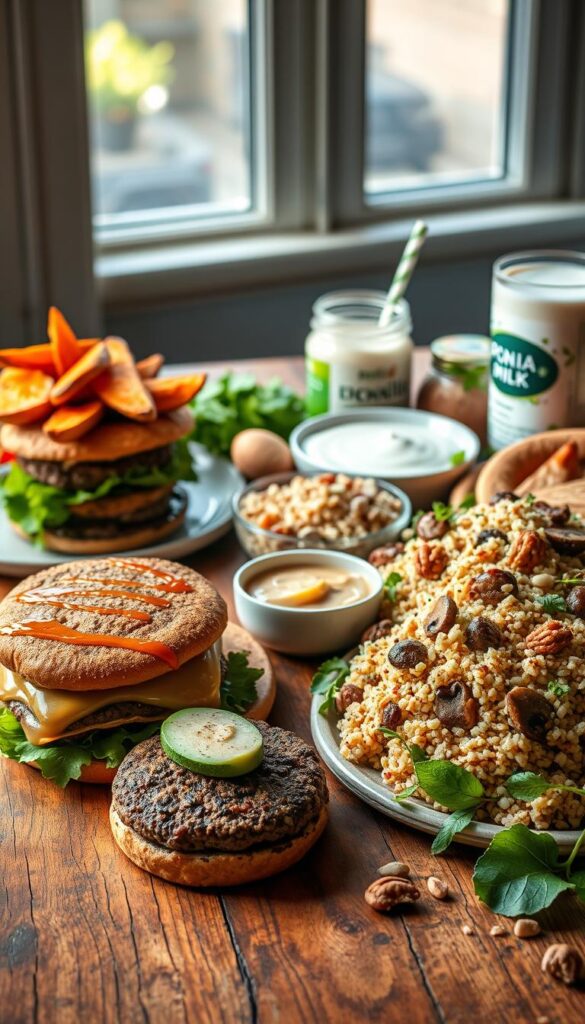
Stock a small set of high-calorie staples so you can boost any meal in seconds.
Nuts, seeds, and nut butters
Keep walnuts, peanut butter, and tahini in your pantry. Walnuts are about 200 calories per ounce. Peanut butter runs ~100 calories per tablespoon and tahini ~89 calories per tablespoon. These items let you add a measured serving when you need extra fuel.
Nuts, seeds, and nut butters
Chia and hemp seeds slide into oatmeal and smoothies to raise protein and calories without bulk. They also improve texture and satiety.
Carb foundations
Stock quinoa (222 cal/cup cooked), brown rice (216), white rice (206), bagels (200–400+), and canned black beans (~227–240 cal/cup). These foods form quick bowls and sandwiches that scale by amount.
Healthy fats and creamy boosters
Use olive oil (~119 cal/Tbsp), coconut oil (~116 cal/Tbsp), and vegan butter (~100 cal/Tbsp) to finish dishes. A can of full-fat coconut milk adds about 600 calories to soups or smoothies. Oat milk (120–130 cal/cup) and soy milk (~100 cal/cup) are great for creamy, caloric pours.
Sweet, energy-dense options
Dates (~25 cal each), dried fruit (raisins ~247 cal/½ cup), and avocado (250–325 cal each) are easy ways to spike calories. Swap bread for a bagel and spread with nut butter or vegan butter for a simple 100 calorie (per tablespoon) upgrade.
| Item | Typical Calories | Common Serving | Quick use |
|---|---|---|---|
| Walnuts | ~200 cal/oz | 1 oz | Top oatmeal or salads |
| Quinoa (cooked) | 222 cal/cup | 1 cup | Bowl base with beans |
| Olive oil | ~119 cal/Tbsp | 1 Tbsp | Drizzle on vegetables |
| Full-fat coconut milk (canned) | ~600 cal/can | 1 can | Add to smoothies or curries |
Tip: Keep a fridge note that shows “1 tablespoon ≈ 100 calories” for peanut butter, vegan butter, and olive oil. That simple guide helps you add exact calories without guessing and keeps your diet consistent.
High-calorie vegan breakfasts that set up your day
A dense, creamy breakfast can deliver most of your morning calories in one bowl. Make a habit of choosing a filling meal that balances carbs, fats, and protein so you stay full and fuel training or a busy morning.
Bodybuilder oatmeal — one-bowl power
Combine 1 cup oats with 2 cups soy milk and cook until slightly loose. Stir in a scoop of protein powder at the end so it blends without clumping.
Top with diced peach and a drizzle of maple syrup. This version runs about ~750 calories and delivers roughly 50 grams protein. Keep the oats creamy — a looser texture is easier to eat and digests better.
Breakfast casserole for busy mornings
Make a savory casserole with vegan sausage, peppers, and JUST Egg for quick slices you can reheat.
A small slice is ~360 calories; a large slice can reach ~720 calories depending on portion and added soy milk on the side. Pair with a dense bagel or a slice of whole-grain bread spread with tahini or peanut butter for extra calories.
“Stir in protein powder at the end and keep textures creamy — small changes make breakfast both higher-calorie and easier to eat.”
- Tip: Track your preferred serving and prep overnight oats if time is tight.
- Tip: Add hemp or chia for extra protein and healthy fats per serving.
Smoothies that pack serious calories and protein
When you need concentrated energy, smoothies let you stack high-calorie ingredients without extra cooking.
2,000+ calorie chocolate peanut butter smoothie
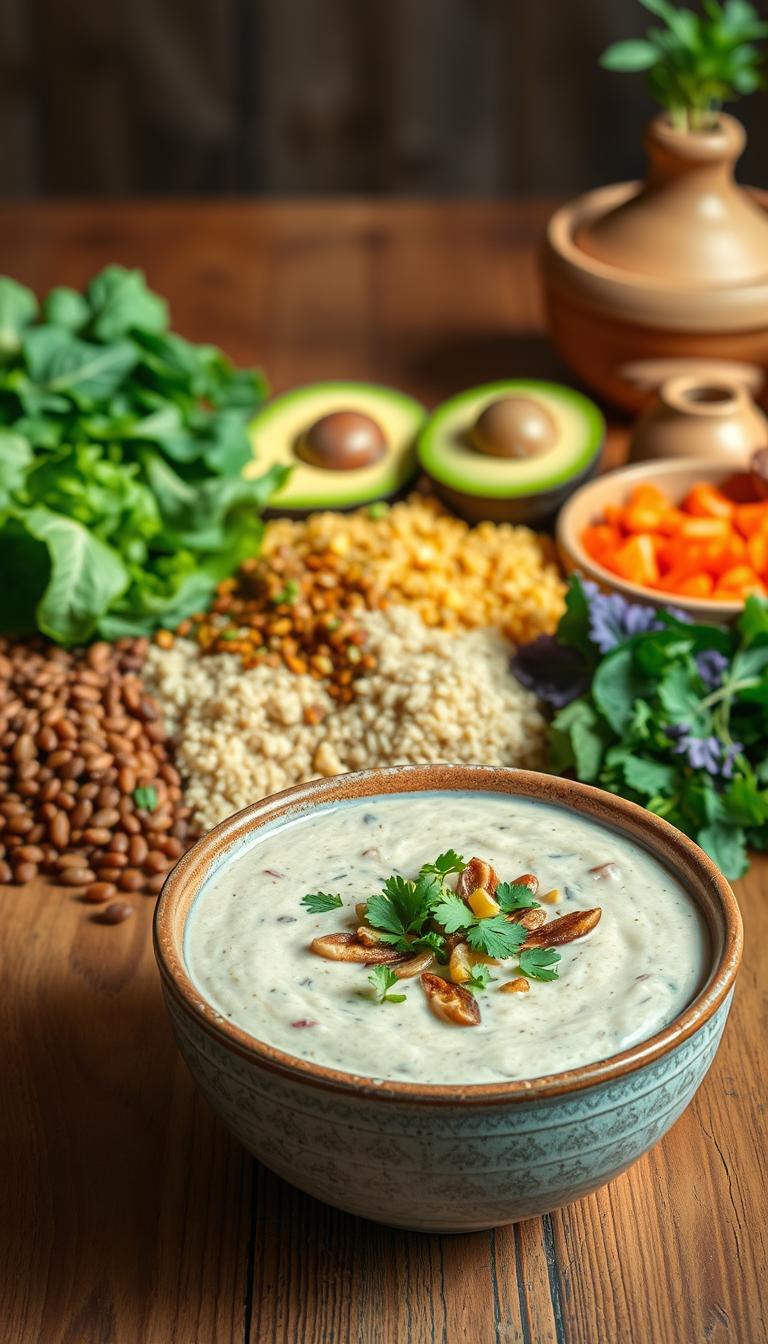
Use a can of full-fat coconut milk (~600 calories) as your base. Add 3–4 ripe bananas, one avocado, ½–1 cup peanut butter, ½ cup dry oats, cocoa, 6–10 soaked dates, and a splash of maple or molasses.
Blend to a thick shake, then thin with a little oat or soy milk if needed. This 32 oz blend delivers massive calories and dense texture so you can finish a large serving in one sitting.
500-calorie green bulking smoothie
For daily use, mix a banana, a handful of spinach, a scoop of protein powder, a tablespoon of almond or peanut butter, some berries, flax or chia, and 225 ml soy or oat milk.
This approach gives about 500 calories and roughly 35–45 grams protein depending on the powder. It’s compact, portable, and easy to digest around training.
Pro tips to keep smoothies drinkable
- Blend protein last so powders don’t gum up the mix and texture stays smooth.
- Use ripe bananas for natural sweetness and easier digestion.
- Keep portions reasonable — match the shake size to your appetite and goals.
- If you need extra calories, add a measured tablespoon of coconut oil or a second dollop of nut butter.
“Layer dense ingredients — coconut milk, oats, peanut butter, and dates — then adjust thickness with a splash of milk.”
Hearty vegan lunches and dinners for steady gains
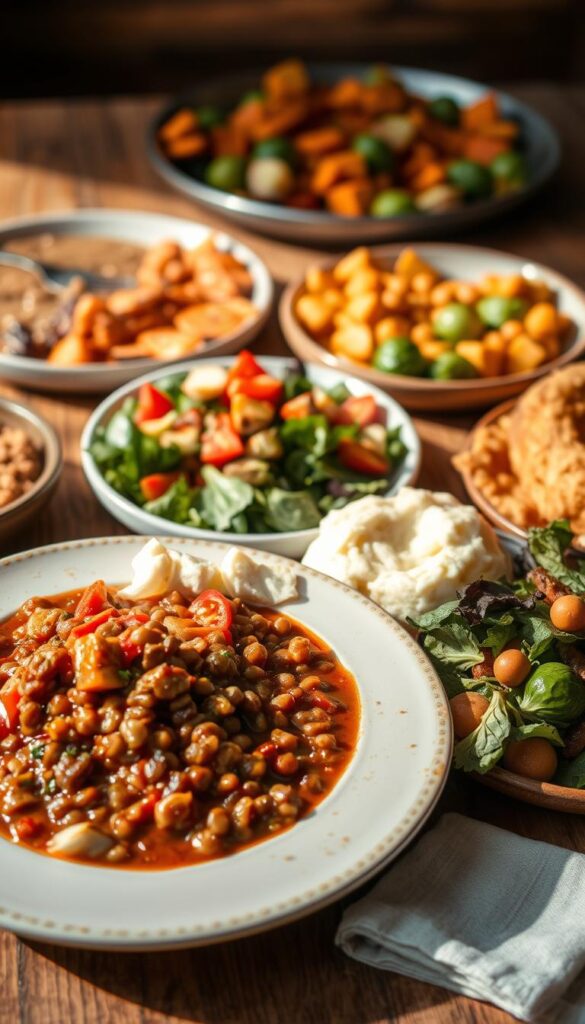
Swap light meals for denser plates at lunch and dinner to steadily raise your daily calories.
Peanut butter sandwich + milk
A peanut butter sandwich on whole-grain bread makes a fast, filling dish at about ~450 calories and ~20 g protein.
Add soy milk (~100 calories, ~8 g protein) or oat milk (~120 calories) to lift totals toward ~570 calories with minimal prep.
Red lentil stew finished with olive oil
Make a big pot by sautéing aromatics in oil, add red lentils, tomatoes, and spices, then simmer until thick.
This stew lands near ~650 calories per serving. Finish with a squeeze of lime and a drizzle of olive oil for extra fat and flavor.
Pasta rotation and comfort classics
Rotate baked mac (~568 kcal), stuffed shells (~659 kcal), and linguine “clam” (~701 kcal) for easy batch meals you can reheat.
On comfort nights, choose vegan chicken parm (~784 kcal) or vegan meatloaf (~650 kcal) and serve with a simple side of garlic bread or a salad dressed in olive oil.
“Keep cooked rice handy so you can build quick high-calorie bowls with beans, avocado, and a splash of coconut milk.”
| Dish | Typical calories | Quick tip |
|---|---|---|
| Peanut butter sandwich + soy milk | ~450–570 | Use whole-grain bread; add milk to boost protein |
| Red lentil stew | ~650 | Finish with 1 Tbsp olive oil (+120 cal) |
| Baked mac / Stuffed shells | 568 / 659 | Batch cook and reheat for easy meals |
Tip: Add vegan butter or a tablespoon of oil to any dish to quickly add ~100–120 extra calories without changing the main recipe.
Snacks, sides, and quick add-ons for extra calories
Keep quick, dense snacks on hand so you can add meaningful calories between meals.
Energy balls are a simple, batchable snack. Mix oats, peanut butter, syrup, cocoa, protein powder, chia seeds, dried fruit, and coconut flakes. Each serving is ~250 calories and ~10 g protein.
Make about 15 and chill them for the week. Pair one with a glass of soy milk for a higher-protein mini meal when you’re short on time.
Trail mix and dried fruit
Carry a cup-sized serving of trail mix—dried cherries, almonds, pumpkin seeds, peanuts, and roasted soybeans. A ~150 g cup can reach ~700 calories and ~40 g protein, depending on the blend.
Single-serving bags are great in your bag or car to bridge long gaps between meals.
Quick sides and add-ons
Hummus at ~200+ calories per ½ cup becomes a hearty side with pita or crackers and can top 300+ calories fast. Sprinkle seeds over salads or oatmeal to nudge calorie totals without much volume.
“Assemble snacks by weight so you know how many grams make a reliable serving.”
| Item | Typical calories | Protein (g) |
|---|---|---|
| Energy ball (1) | ~250 | ~10 |
| Trail mix (~150 g) | ~700 | ~40 |
| Hummus (½ cup + pita) | ~300+ | ~8–10 |
Calorie-boosting tactics you can use at every meal
Small swaps at each plate can add hundreds of calories without stretching your prep time.
Add more healthy fats: Finish bowls, salads, and soups with a drizzle of olive oil, a spoonful of tahini, or a pat of vegan butter. A single tablespoon of oil or butter typically adds around 100 calories and improves mouthfeel.
Add fats at service
Spooning oil or tahini on after cooking keeps texture and flavor bold. It also concentrates calories so you don’t need huge portions.
Ask “what can I add?”
Before you eat, scan the plate: avocado slices, a handful of dates, an extra tortilla, or a cup of soy milk can push totals up fast. These small items steady daily progress when you’re looking gain weight.
Cook smart
Sauté grains, beans, and veg in oil rather than water to raise calories and taste without extra time. Use canned full-fat coconut milk to thicken stews or curries — one can adds a large amount of calories and a creamy texture that’s easy to finish.
“If progress stalls for more than two weeks, add a small, repeatable amount each day — like a tablespoon of oil at two meals.”
| Action | Typical calories added | Why it helps | Quick example |
|---|---|---|---|
| Drizzle olive oil | ~120 per Tbsp | Boosts fat and flavor | Finish a salad or pasta |
| Avocado slices | ~250–325 per fruit | High-calorie, whole-food fat | Add to bowls or toast |
| Full-fat coconut milk | ~600 per can | Thickens soups; adds calories | Stir into curry or stew |
| Soy milk (cup) | ~100 | Easy liquid calories + protein | Drink with snack or smoothie |
Conclusion
Finish by focusing on small, repeatable swaps that lift daily calories without extra cooking.
Use dense ingredients and steady portions to make progress feel simple. Center meals on coconut milk, rice, olive oil, nuts, and seeds. Add a scoop of protein powder or a cup of soy milk so you hit grams protein near 0.7 g per pound of body weight.
When time is tight, rely on prepped pasta, stew, energy balls, and a high-calorie smoothie. Track your weekly trend and adjust serving amounts by a tablespoon of oil or a spoon of peanut butter to nudge calorie totals.
Consistency over time wins: pick dishes you enjoy, repeat them, and use clear serving cues—one can of coconut, one cup rice—to keep progress steady and sustainable.