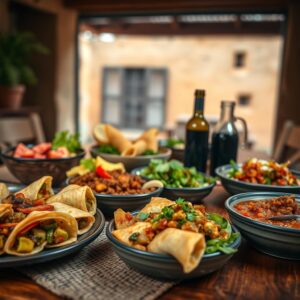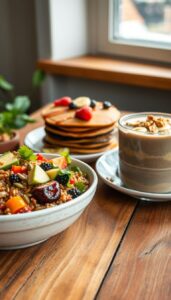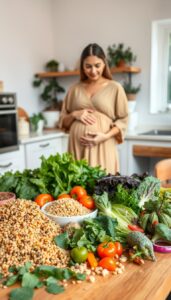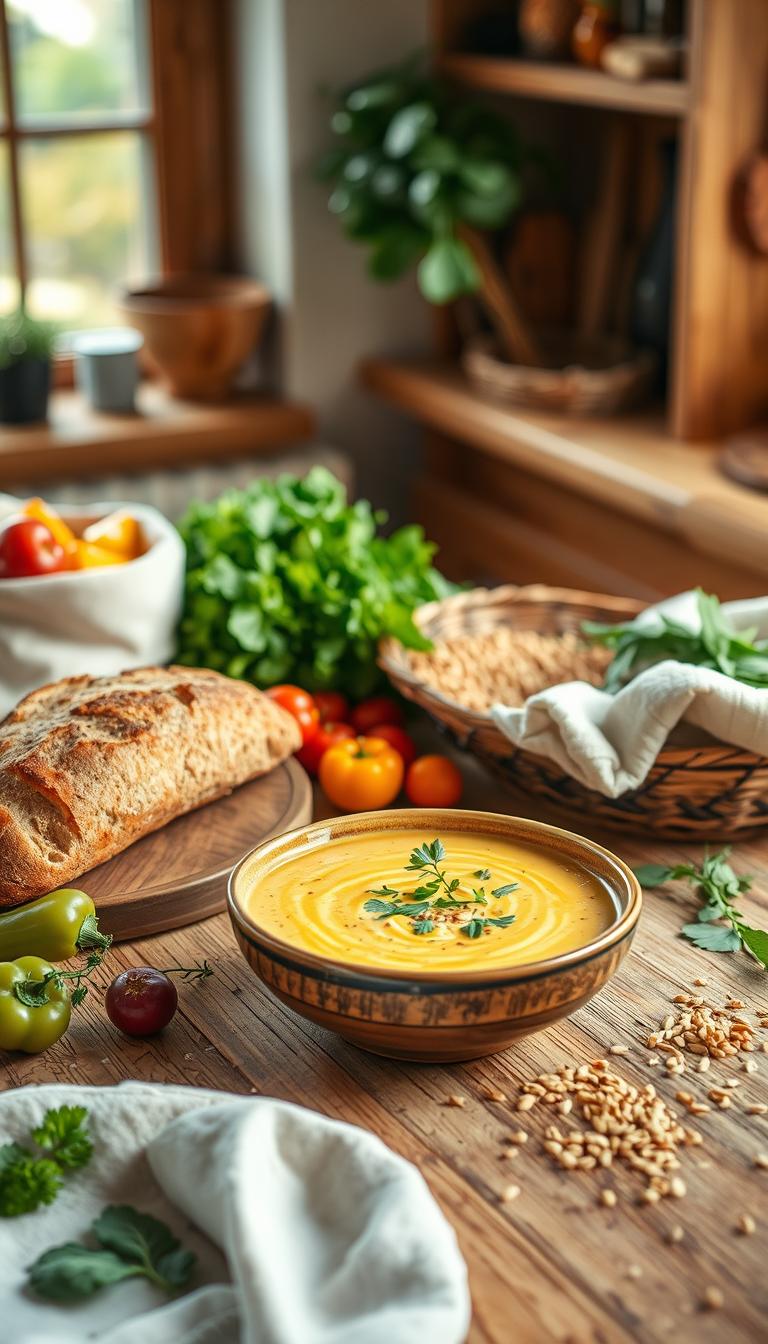
Can a plant-forward approach truly fuel your recovery and support your baby’s needs after birth?
You need simple, nourishing meals in the postpartum weeks, and this guide is built to help. A balanced vegan diet can support energy, digestion, and anti-inflammatory recovery while contributing nutrient-rich milk for your baby.
This section gives a clear, recipe-forward view of how to target protein, omega-3s, iron, calcium, zinc, vitamin D and B12 so you can make sure your bases are covered. You’ll see practical meal and bowl ideas—smoothies, lentil soups, quinoa salads, and one-pan tofu or stir-fries—that are easy to repeat for weeks.
Practical tips on fortified plant milks, simple supplements, hydration with water, and quick lactation boosts like oats, flax, and brewer’s yeast are included so cooking supports both you and your milk supply.
Key Takeaways
- Target key nutrients like protein, iron, omega-3s, calcium, and B12 when planning meals.
- Use fortified foods and a short supplement list to fill likely gaps.
- Choose repeatable bowls and one-pan meals to save time postpartum.
- Incorporate oats, flax, and brewer’s yeast for lactation-friendly snacks.
- Keep hydration with plain water and electrolyte-rich options.
What you’ll find in this vegan breastfeeding recipe guide
Here you’ll find a practical 15-day plan and focused spotlights that make cooking in early parenthood simpler and more nourishing.
You get a clear sample meal plan that outlines breakfasts, lunches, dinners, and snacks for a typical day. Each entry shows timing, swaps, and which components you can freeze for quick reheats.
Expect hands-on ideas like spinach-banana-chia smoothies, quinoa and black bean salads, tofu stir-fries with bell peppers, lentil soups, stuffed peppers, chia pudding, and peanut butter snack ideas.
- Time-saving tactics: 30-minute meals, one-bowl dinners, and prepped freezer portions that reheat in minutes.
- Pantry and shopping tips: staples to keep on hand so you can assemble balanced meals fast.
- Nutrition support: how to pair fortified foods and simple supplements to cover key nutrients on a vegan diet.
- Featured cookie: a lactation cookie preview with 15–18 minute bake time and freezer-friendly dough.
The guide helps new mothers and busy moms skim or dive deep depending on the time you have. It’s built to make everyday cooking feel doable and nourishing.
Key nutrients for breastfeeding on a vegan diet
Targeted nutrition helps you meet both your needs and your baby’s through straightforward, repeatable meals.
Protein and iron made easy: Build bowls with tofu, lentils, beans, quinoa, and fortified grains to reach daily protein goals. Pair iron-rich legumes and dark leafy greens with citrus or bell pepper to boost absorption at a single meal.
Omega-3s and healthy fats
Include ground flaxseed, chia seeds, walnuts, and a small amount of coconut or avocado for steady energy. Consider algae-based DHA if you need a direct source of long-chain omega-3s while you are postpartum.
Bones, B12, and small but crucial nutrients
Choose fortified plant milk and calcium-set tofu for bone support, and ask your provider about a B12 supplement—fortified foods and nutritional yeast can help but often are not enough alone.
- Zinc: pumpkin seeds, chickpeas, cashews.
- Folate & choline: beans, quinoa, broccoli.
- Iodine & vitamin A: iodized salt, nori, sweet potato.
“Focus on a few key nutrients and simple swaps to keep postpartum meals nourishing and repeatable.”
Smart prep for busy new moms: pantry staples, freezer wins, and 30-minute meals
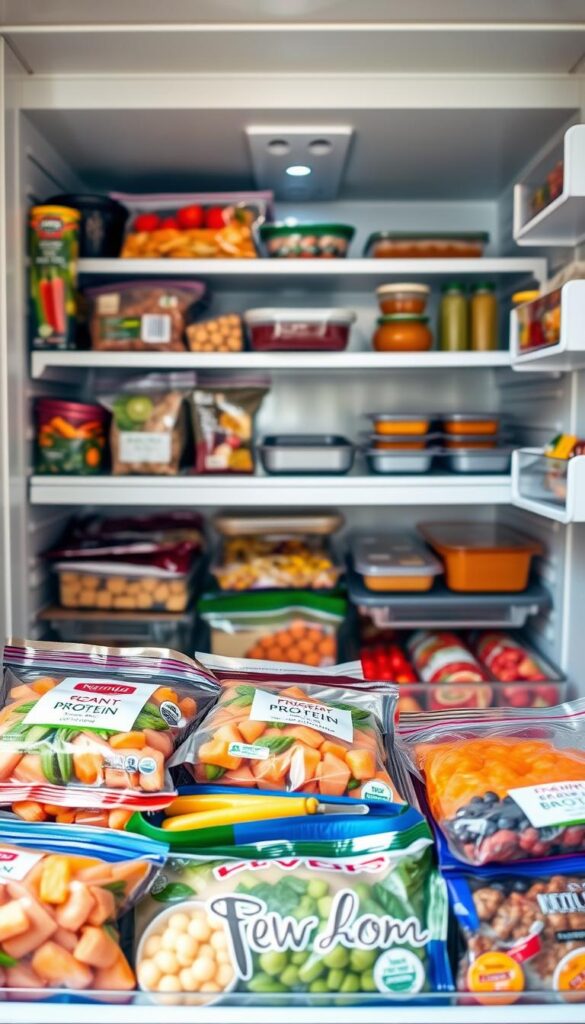
Prep that focuses on pantry and freezer basics saves minutes and helps keep your energy steady during postpartum.
Pantry and freezer staples to stock
Keep basics on hand: canned beans, lentils, quinoa, brown rice, fortified cereals, tomato sauce, and a small spice kit. These turn into a fast, balanced meal with almost no planning.
Freezer wins: frozen broccoli, spinach, mixed veggies, berries, pre-cooked grains, and portioned sauces make full plates in minutes. Stash tofu and tempeh for quick protein and nuts or seeds for easy boosts to a breakfast bowl.
Time-of-day tips: breakfast, midday, and evening
- Morning: overnight oats or chia pudding with fortified milk for a calm start.
- Midday: build a quinoa or bean bowl with frozen veg for steady energy.
- Evening: one-pan tofu stir-fry or lentil soup to wind down the day.
- Hydration: keep a water bottle filled; add coconut water when you need electrolytes.
“Prep once, eat twice: batch-cook grains and roast veg, then freeze portions to cut daily prep time.”
vegan breastfeeding recipes: breakfasts, lunches, dinners, and snacks
Use these approachable breakfast, lunch, dinner, and snack ideas to meet protein needs and support milk production while keeping prep short.
Breakfasts that fuel milk production
Quick builds: oats with fortified plant milk and seeds, chia pudding, and green smoothies with spinach, banana, and chia. Add flax or brewer’s yeast for extra protein and omega-3s in minutes.
Lunches to keep you going
Rotate quinoa bowls with beans and veggies, tofu scrambles with bell peppers, and lentil pilafs. These meals give steady protein and iron and are easy to pack for on-the-go feeds.
Dinners with staying power
Pick tofu or tempeh mains, lentil curry, stuffed squash, or pasta with seitan for hearty, fiber-rich dinners. Keep one-pan tofu stir-fry or lentil soup as a 30-minute fallback.
Snack ideas for steady energy
Choose hummus plates, edamame, trail mix, chia pudding, or fruit with peanut butter for quick healthy fats and protein between feeds.
Quick add-ons that matter
Boost any bowl or meal: sprinkle seeds, add brewer’s yeast, stir in nut butter, or toss in leafy greens to raise nutrient density without extra cooking.
“Keep a short list of 30-minute meals and a few nutrient-rich add-ons to make nourishing eating feel effortless.”
| Meal | Core Ingredients | Prep Time | Why it helps |
|---|---|---|---|
| Breakfast bowl | Oats, fortified plant milk, chia, fruit | 5–10 minutes | Protein, seeds, vitamin C for iron absorption |
| Lunch bowl | Quinoa, black beans, tofu, veggies | 15–30 minutes | High protein, fiber, steady energy |
| Dinner | Tofu stir-fry, bell peppers, brown rice | 20–30 minutes | Balanced protein and healthy fats |
| Snack | Edamame, trail mix, or apple + peanut butter | 1–5 minutes | Quick protein and healthy fats |
Featured recipe: vegan lactation cookies with oats, flax, coconut oil, and brewer’s yeast
Make a batch you can grab between feeds. These cookies combine oats, ground flax, and brewer’s yeast for a compact snack that supports milk production and fits into a busy day.
What’s in the mix: oats and flax add beta-glucan and ALA; brewer’s yeast supplies B vitamins; coconut oil gives MCTs. Use a flax egg (2 tbsp ground flax + 6 tbsp water), whisk coconut oil with sugar, add plant milk and vanilla, then fold in flour, baking powder, baking soda, salt, and 1–3 tbsp brewer’s yeast. Stir in oats and chocolate chips and bake at 350°F for about 15–18 minutes.
Customize and swap
Choose refined coconut for neutral flavor or unrefined to boost coconut notes. Swap vegan butter one-for-one if you prefer. For gluten-free, use cup-for-cup GF flour and certified GF oats.
Make-ahead and freezer tips
Portion dough into balls, freeze on a sheet, then bag. Bake from frozen—add a few extra minutes so they finish evenly. Store baked cookies in an airtight container for a few days or in the freezer for longer.
“A simple frozen stash means you can have warm, fresh cookies in minutes without extra effort.”
A simple vegan meal plan for a balanced day
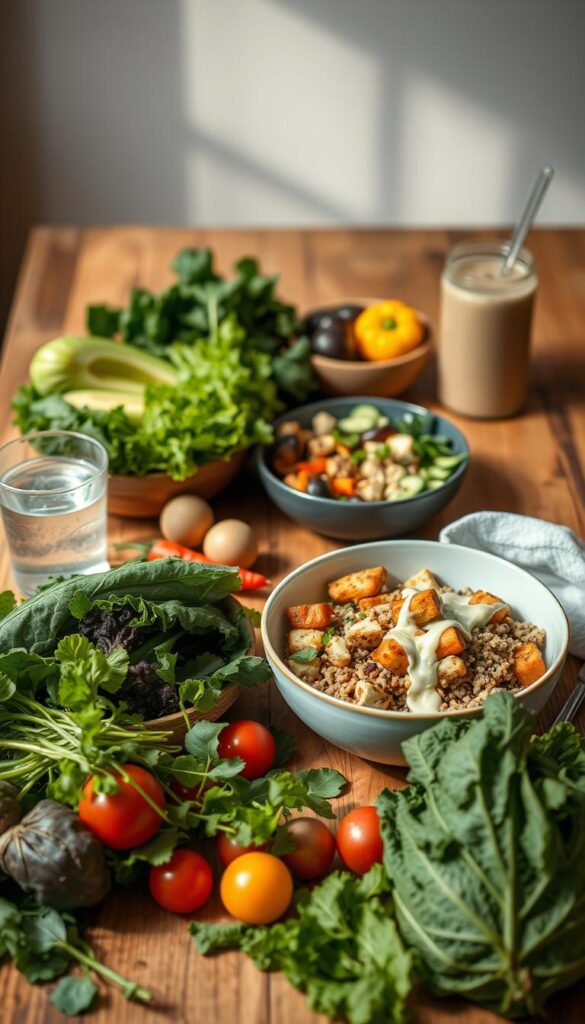
Start your day with a simple, nutrient-dense plan that keeps energy steady and makes feeding windows easier to manage.
Sample day: Begin with oats or a smoothie made with fortified plant milk, greens, fruit, and chia seeds for quick nutrients and a calm morning.
Sample day: smoothie or oats, protein-packed lunch bowl, hearty dinner, easy snacks
For lunch, build a protein-packed bowl—quinoa or brown rice with chickpeas or tofu, colorful veggies, and a tahini or lemon dressing.
Dinner can be lentil curry or grilled tofu over rice. Add leafy greens for iron and calcium and a side of roasted veg for fiber and comfort.
Keep easy snacks on hand: hummus with carrots, edamame, trail mix, or chia pudding for steady fuel between feeds.
Hydration and rhythm: water, coconut water, and feeding/pumping cues
Drink plain water throughout the day. Add coconut water when you want electrolytes after long feeds or workouts.
Use feeding or pumping cues to remind yourself to eat and sip. A short snack or mini-meal at each feed keeps your energy steady and supports milk output.
“Prep a few grain and protein portions on weekends and freeze them so a full meal is always within reach.”
| Time | What to eat | Why it helps |
|---|---|---|
| Morning | Smoothie/oats with fortified milk, fruit, chia seeds | Quick nutrients, iron absorption, lasting energy |
| Lunch | Quinoa/chickpea or tofu bowl with veggies | Protein-rich, steady energy through afternoon |
| Snack | Hummus, edamame, or trail mix | Fast protein and healthy fats between feeds |
| Dinner | Lentil curry or grilled tofu with rice | Hearty protein, fiber, and restorative nutrients |
Make sure you cover your bases: supplements, fortified foods, and safety
Talk with your provider early about which supplements make sense for you and your baby while you nurse. Ask specifically about a B12 supplement, vitamin D dosing, iodine, and whether an algae-based DHA is recommended for your situation.
Lean on fortified foods—plant milks, fortified cereals, and calcium-set tofu—to boost key vitamins and minerals. Use iodized salt or small amounts of nori to help cover iodine needs, and remember that fortified nutritional yeast can supply B12 while brewer’s yeast in cookies does not replace a supplement.
Track iron, calcium, zinc, folate, choline, vitamin A, and omega-3s through balanced meals and targeted supplements if your clinician advises. If you have anemia or thyroid issues, tailor choices and dosing with medical guidance.
Practical safety and storage tips
Portion and label meals before you freeze them so you can reheat safely and avoid waste. Reheat thoroughly, follow safe-thawing practices, and keep a simple rhythm—align supplements with a meal or feeding time to improve tolerance and consistency.
“Make sure to discuss B12 and other specific needs with your healthcare provider rather than relying on fortified snacks alone.”
- Speak to your provider about B12, vitamin D, iodine, and DHA.
- Use fortified foods to bolster vitamins and minerals in daily meals.
- Portion, label, freeze, and reheat meals to keep quality and safety high.
- Watch for persistent fatigue or other signs of nutrient gaps and check in early.
From kitchen to milk supply: practical tips for consistency
Build a simple daily rhythm so meals, water, and pumping fit into short pockets of time and support supply.
Create repeatable routines: shop once, prep once, and cook in batches so nourishing meals flow across weeks. Batch-cook tofu, roast trays of veggies, and pre-chop bell peppers to speed assembly.
Set micro-windows of a few minutes to assemble snacks between feeds. A mini-meal takes minutes and keeps your energy steady without needing a long cook block.
Anchor hydration by drinking water at each feed or pump. Keep a bottle nearby as a visual cue and add coconut water when you want electrolytes after long sessions.
Use the freezer for proteins, grains, soups, and sauces. Rotate portions so a balanced plate is always within reach on busy days and across the coming weeks.
“Frequent feeding or pumping and steady meals matter more for supply than any single snack.”
Track what works—times, portions, and flavors—and repeat the winners. Each evening, jot a one-line checklist for tomorrow so the first steps are easy when you’re tired.
| Action | Why it helps | Quick example |
|---|---|---|
| Batch-cook tofu & grains | Save time and secure protein for many meals | Tofu, brown rice, roasted bell peppers |
| Micro-meals in minutes | Prevents long gaps that drain energy and supply | Hummus + chopped veg or a quick oats cup |
| Hydration cue | Supports milk production and body recovery | Water at each feed; coconut water after long sessions |
Conclusion
Conclusion.
Keep it simple. Use the balanced vegan framework to plan one easy day of meals and repeat it across the week.
Lean on make-ahead staples, batch-cook proteins like tofu, and stash grains and soups in the freezer so a full vegan meal comes together fast.
Focus on vitamins, fats, and minerals from fortified milk, iodized salt, greens, and small supplements such as B12 when your provider recommends one.
With a short meal plan, a few go-to bowls, and the lactation cookies or snacks ready, you’ll support your body, your baby, and steady postpartum energy.