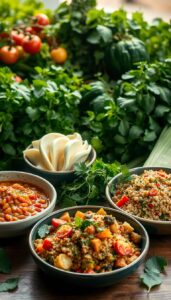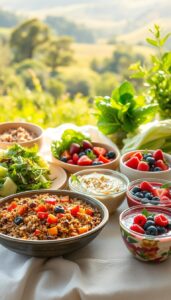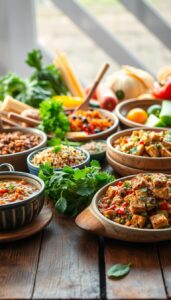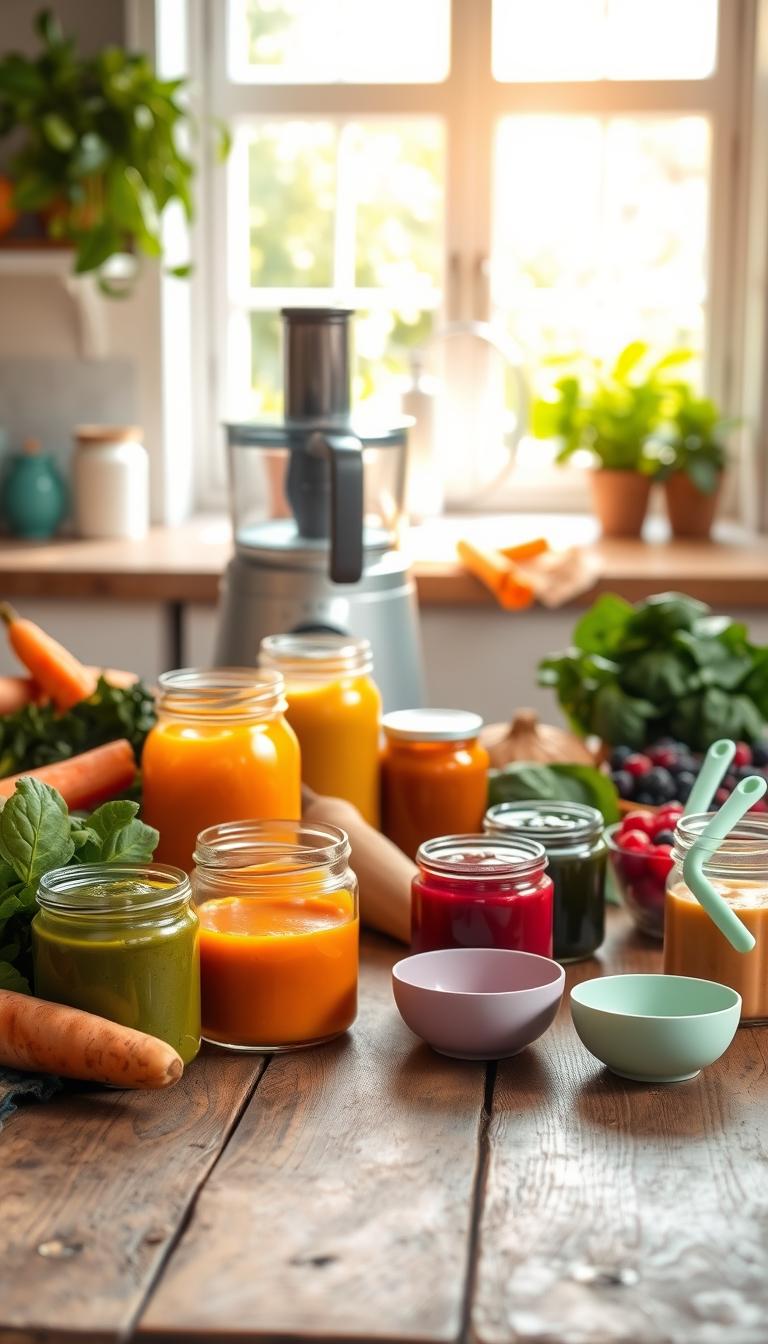
Can a single, simple family meal meet your infant’s needs and let everyone eat together?
You’ll learn how to start safely at about six months with soft, graspable pieces and low-salt bases that the whole family can share. This guide focuses on iron, healthy fats, and calories so growth stays on track while you keep meals manageable.
Expect practical ideas like oat-based bars, tofu scramble crumbles, red lentil soup, pasta with butternut “cheese” sauce, and fist-size bean patties. These options fit baby-led weaning and make it easier for parents to cook once for everyone.
Simple prep and smart swaps—like no-salt broth and liquid aminos—help you add flavor without extra sodium. You’ll also get tips on textures, portion sizes, and batch-cooking to cut mess and stress.
Key Takeaways
- Start around six months with soft, graspable pieces the child can self-feed.
- Prioritize iron, calories, and healthy fats in each meal.
- Cook low-salt bases so you can season your plate, not theirs.
- Use easy, family-friendly dishes that reheat and freeze well.
- Focus on texture, size, and safety basics for early eaters.
What you’ll learn today about vegan baby food, BLW, and feeding your family
You’ll get a clear plan for starting solids and bringing your child to the table with everyone else.
Begin simply: many families start with one daily baby led weaning session at six months and add meals as the infant shows readiness.
Offer the family meal in safe formats: strips, wedges, and patties roughly the size of your child’s fist. Hold back added salt and strong condiments until the baby’s portion is plated.
Time-savers like pre-baked oat bars and tofu strips heat quickly and keep mealtimes calm in the first weeks.
- Core idea: baby led—same meal, safe sizes and textures.
- Daily flow: start one solids session around six months and build up.
- Safe shapes: strips, wedges, fist-size patties make grasping easier.
- Deconstruct: serve components separately so new foods aren’t mixed together.
- Practical tips: preload spoons for thick soups; let little hands practice finger foods.
Vegan baby nutrition basics: iron, fat, calories, and smart fiber at present
Focus on a few high-impact nutrients now: iron, concentrated energy, and daily healthy fats for brain growth.
During infancy, iron needs peak. Offer iron-fortified infant cereal mixed into oatmeal, pancakes, or muffins to raise intake without fuss.
- Iron-rich choices: lentils, beans, tofu, farro, and chia throughout the week.
- Pairing tip: serve iron foods with vitamin C sources like berries or citrus to improve absorption.
- Calorie strategy: favor avocado, tahini, and nut or seed butters so small tummies get enough energy.
“Small portions should be dense in nutrients — not bulky in fiber — so infants can eat enough to grow.”
Include healthy fats daily: flax or chia stirred into porridge, or a light drizzle of tahini on steamed veg.
| Food | Why it helps | How to serve |
|---|---|---|
| Tofu (calcium-set) | Protein and calcium | Soft cubes or crumbled in scramble |
| Lentils | Iron and protein | Mashed or in thick soups paired with citrus |
| Avocado | Calorie-dense healthy fat | Mashed or spread on soft toast |
Practical note: consider B12 and vitamin D from fortified plant milk or supplements, and rotate textures while keeping salt minimal during the first months so your baby adapts safely.
Baby-led weaning made simple: readiness, textures, and safe pieces

Introduce one daily solids session once your child shows steady head control and reaches for foods. Start around six months when they can sit with minimal support and bring objects to the mouth.
How to cut for grasp: offer strips, wedges, or patties about the size of your child’s fist so they can hold food easily. Shape bean patties to a fist size or cut them into strips. Crumble tofu into large pieces so your baby can grab rather than struggle.
Texture and serving tips: cook until foods are easily squishable between your fingers. Serve thick, creamed soups that cling to a preloaded spoon. Deconstruct meals so each component has a predictable texture.
- Confirm readiness signs around six months: sitting, interest in meals, and mouthing objects.
- Rotate textures—soft strips, soft patties, fork-tender pasta—to build chewing skills.
- Keep added salt minimal; season adult plates at the table.
- Learn gagging vs. choking and practice first-aid steps before you begin led weaning.
“Small hands need predictable pieces and forgiving textures to learn safe self-feeding.”
Pantry, fridge, and tools: ingredients and prep that make recipes easy
Smart storage, basic gear, and a few go-to sauces speed up cooking for the family.
Stock core ingredients like oats, tofu, lentils, pasta, canned tomatoes, chia, tahini, and nutritional yeast so you can assemble meals fast.
Batch-cook root vegetables—carrots, potatoes, beets—by steam-roasting large trays. Cool and portion them for the week so safe textures are ready in minutes.
Keep canned and frozen vegetables and fruit on hand to save time and reduce waste. Low-salt swaps such as liquid aminos, no-salt broth, and salt-free spice blends let you add flavor without extra salt.
- Use a steamer insert, sheet pans, and a high-powered blender to make smooth sauces and soft purees.
- Make one or two sauces (butternut “cheese” or hummus) on the weekend to mix into multiple dishes.
- Organize the fridge with labeled bins for cooked items and pre-cut pieces so plating takes less time.
Tip: rotate proteins—tofu, lentils, beans—across the week for variety without extra effort.
| Staple | Why | Quick use |
|---|---|---|
| Oats | Energy and texture base | Porridge, bars, binder for patties |
| Tofu & lentils | Protein and iron | Scrambles, stews, crumbled fillers |
| Frozen veg | Convenience and nutrition | Steam, mash, or fold into sauces |
| Tahini & nutritional yeast | Healthy fats and savory notes | Quick sauce, spread, or flavor boost |
vegan baby food recipes
You can keep flavors bright without added salt or sugar by leaning on spices, citrus, and umami-rich ingredients.
Plate your child’s portion first, then add seasonings to adult plates. This keeps sodium and sweeteners low while letting the family eat the same meal.
Use fruit purées like banana or applesauce to sweeten bakes, pancakes, and oat bars instead of added sugar. Make pancakes with plant milk and mashed fruit so they are tender and sweet without syrups.
Build savory depth with nutritional yeast, garlic or onion powder, citrus zest, and toasted seeds. Liquid aminos and no-salt vegetable broth are useful low-sodium swaps that keep taste intact.
- Keep textures soft: bake oat bars and porridge fingers until just set for easy grasping.
- Preload spoons with thick soups so your child can practice self-feeding safely.
- Roast large trays of vegetables and re-season adult portions later for quick weeknight meals.
“Repeat favorites through the months so your child learns and accepts familiar flavors.”
| Swap | Why it works | How to serve |
|---|---|---|
| Fruit purée for sugar | Natural sweetness, adds moisture | Muffins, pancakes, porridge fingers |
| Nutritional yeast for salt | Umami and B12 boost | Stir into sauces, scrambles, spreads |
| Liquid aminos / no-salt broth | Low-sodium savory lift | Use in stews, sauces, quick glazes |
| Roasted veg batch | Time-saver, texture control | Plate soft pieces first; adults finish with extra herbs |
Breakfast and first foods: oatmeal bars, porridge fingers, pancakes, chia pudding
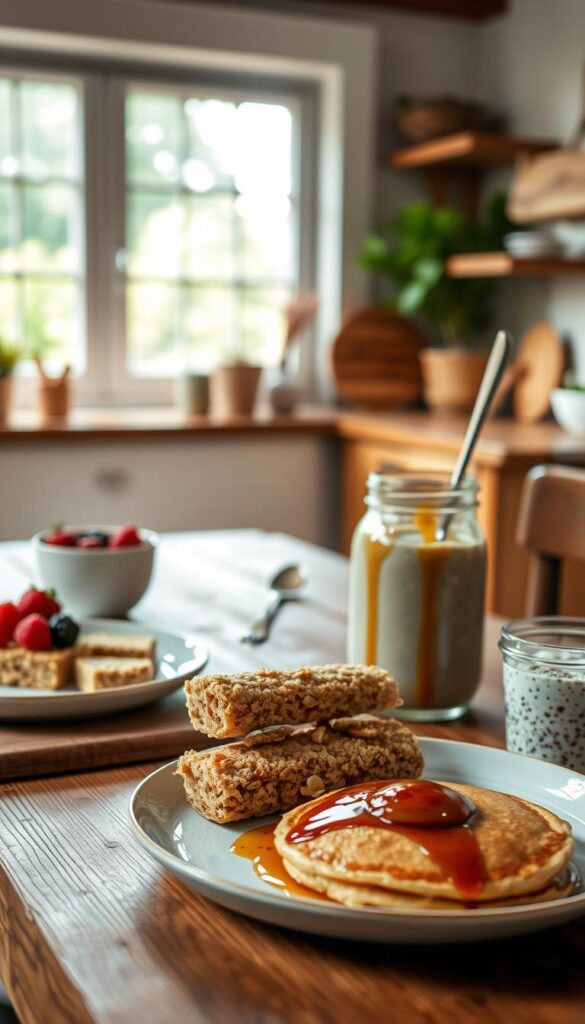
Mornings are easiest when you have a handful of sturdy, nutrient-dense breakfast options ready to serve. These choices let you feed the whole family while keeping textures safe for early weaning.
No-added-sugar BLW oat bars and porridge fingers for weaning
Bake no-added-sugar oat bars and cut them into large wedges so your child can grasp and self-feed. Store a tray in the fridge to warm quickly during the day.
Porridge fingers reduce mess and reheat well. Keep textures soft but cohesive so pieces don’t crumble when held.
Egg-free baby pancakes with plant milk and fruit-sweetened ideas
Whisk egg-free pancakes using plant milk and mashed pineapple or banana for natural sweetness. Make them tender and slightly thick so little hands can pick them up.
Creamy chia puddings and toddler-friendly oat bowls
Offer creamy chia pudding as a spoonable option rich in fiber, calcium, iron, and omega-3s. Preload a spoon to support self-feeding with minimal frustration.
Serve toddler oat bowls with coconut or other plant milk, cinnamon, soft berries, banana, and a swirl of nut or seed butter for extra calories when appropriate.
“Repeat breakfast favorites each week so you don’t overcomplicate cooking during busy mornings.”
- Quick tips: rotate cinnamon, vanilla, and mild spices for variety.
- Keep one tray of oat bars ready in the fridge for the day.
- Use porridge fingers and preloaded spoons to reduce mess and speed up feeding.
| Item | Why | Serve |
|---|---|---|
| Oat wedges | High energy, easy grasp | Large wedges, warm from fridge |
| Chia pudding | Omega-3s, calcium | Spoonable, preload spoon |
| Egg-free pancakes | Soft texture, fruit-sweetened | Cut into strips for grasping |
Mains your baby and toddler can share: tofu scramble, lentil stew, pasta, bean patties
Make weeknight mains that both toddler and adult palates enjoy — with textures shaped for small hands. Keep flavors mild and salt low so you can season adult plates at the table. Plan plates that are deconstructed: protein, starch, and veg so your child learns each texture.
Tofu scramble in large crumble for easy grasp
Crumble firm or extra-firm tofu into large, irregular pieces so your child can pick them up easily. Season with garlic and onion powder and fold in soft veg like cooked zucchini or sweet potato.
Tip: keep sauces off the child’s portion; adults can add soy or hot sauce at the table.
Red lentil coconut-style creamed soup and stew
Simmer red lentils until they break down into a thick, creamy stew. Blend a portion smooth for younger mouths and leave some chunky for toddlers practicing self-feeding.
Make extra — the stew freezes well and reheats quickly on busy cooking nights.
Pasta shapes for BLW with butternut “cheese” sauce
Choose graspable pasta like penne, rotini, or fusilli and cook until very tender. Toss small piles with a dairy-free butternut sauce so the whole family can enjoy the same meal.
BLW-friendly bean patties: fist-size or strips
Form bean patties to roughly your child’s fist size or cut into thick strips for easy holding. Pan-sear until edges are slightly firm and the inside stays soft.
- Include a reliable protein each main — tofu, lentils, or beans — to support growth.
- Serve deconstructed plates so your child focuses on one texture at a time.
- Double-batch sauces and stews across months to save time and reinforce familiar flavors.
“Soft, predictable pieces make it easier for little hands to learn self-feeding and for you to cook once for all.”
Sauces, sides, and spreads: dairy-free “cheese” sauce, hummus, butternut pasta sauce
Creamy, low-salt toppings can make steamed veg and pasta more appealing while keeping nutrition front and center.
Make hummus at home so you control texture and sodium. Blend chickpeas with tahini, olive oil, lemon, and a touch of roasted garlic. Serve as a dip or spread for soft vegetables and patties.
Dairy-free “cheese” sauce combines cooked butternut or cauliflower, nutritional yeast, and a splash of no-salt vegetable broth. Stir into pasta or drizzle over steamed veg for a creamy finish that small hands accept.
- Batch the butternut pasta sauce; it freezes well and thaws quickly for weeknights.
- Use liquid aminos instead of soy sauce to cut sodium when seasoning family plates.
- Keep a jar of salt-free spice mix and use onion powder, roasted garlic, and nutritional yeast for savory depth.
- Blend sauces smooth for younger months, then add texture as skills improve.
- Fold pureed vegetables into sauces and add a drizzle of olive oil or tahini to boost calories.
Quick idea: thin sauces with no-salt broth so they cling to pasta or toast soldiers, making self-feeding easier.
Snacks and treats without added sugar: muffins, carrot cake bites, teething biscuits, avocado mousse
Soft, fruit-sweetened snacks let you cut refined sugar while keeping baked items moist and tender. Use mashed banana or applesauce to replace sugar and some butter or oil.
Teething biscuits and muffin wedges support grasping and soothe sore gums. Bake biscuits firm enough to hold but soft enough to break down safely in the mouth.
Carrot cake bites make portable, nutrient-dense treats. Use grated carrot, oats, and a little cinnamon. Make them gluten-free if needed.
- Blend avocado, banana, unsweetened cocoa, and coconut milk for a creamy avocado chocolate mousse.
- Keep textures cohesive so pieces don’t crumble into hard bits for babies.
- Cut muffins into large wedges for early months, then smaller pieces as skills improve.
“Using puréed fruit keeps bakes moist and reduces reliance on added fats.”
| Snack | Main swap | Serve |
|---|---|---|
| Fruit-sweetened muffins | Banana or applesauce for sugar and fat | Large wedges, refrigerate 3–4 days |
| Teething biscuits | Minimal sweetener, firm-soft texture | Offer under supervision for grasp practice |
| Avocado chocolate mousse | Avocado + banana for creaminess | Spoon for older babies; top with coconut yogurt |
Weekly meal prep and one-meal-for-all: batch roots, grains, and sauces
A short weekly prep session can cut daily cooking time and keep meals consistent for the whole family. Roast carrots, potatoes, and beets in one tray. Cook a pot of rice or grains and make two sauces you can reuse.
Cook once, modify for baby, and season at the table for adults. For younger infants, blend a small portion of soups or cook components longer so textures soften. Keep extra frozen and canned staples on hand to shorten the process.
How to make it practical
- Pick a weekly prep block to batch-roast roots and cook grains so weeknight meals are fast.
- Make one family meal, then cut or blend a portion for your baby and add seasonings to adult plates.
- Portion soups: blend a small share for the little one and leave the rest chunky for adults.
- Label containers with contents and day so plating takes less time and reduces stress for parents.
| Prep task | Why | Use during week |
|---|---|---|
| Roasted roots | Flexible texture, stores well | Mix into stews, mash for baby, reheat |
| Cooked grains | Base for many meals | Porridge, bowls, stuffings |
| Sauces (hummus, butternut) | Quick flavor lift | Freeze portions, thaw for dinners |
| Frozen veg & canned beans | Save time, keep nutrition | Shorten cook time, add protein |
“Short, repeatable prep routines help you stay consistent and keep meals less stressful.”
Conclusion
Cook once, adapt a portion: make a simple family meal and set aside a soft, graspable portion so your child can explore safely while you season the adult plates.
Start solids around six months with strips, wedges, or fist-size patties. Use iron-fortified cereal in bakes, pair plant iron with vitamin C, and favor avocado, tahini, or seed butter for calories and healthy fats.
For practical led weaning and baby led approaches, batch-cook roots and grains, crumble tofu into large pieces, and choose pasta shapes and bean patties that are easy to hold. Keep added salt minimal and use sauces and spreads to boost flavor without sodium.
Final idea: stay consistent, be patient, and build simple routines so BLW becomes a confident, sustainable way to offer varied, nutrient-rich foods.