Can one simple week of meals help you hit daily fiber goals without sacrificing flavor?
You will find clear, practical steps to plan breakfasts, lunches, dinners, bowls, soups, and snacks that actually satisfy.
This short guide points to high-payoff options—think overnight oats, chickpea-based dishes, lentil ragu, and a make-ahead chili—that deliver big fiber and solid protein per serving. It also shows fast wins, like 25-minute ramen-style soups, polenta bowls, and quick tofu bites.
Use familiar ingredients—beans, oats, whole-grain pasta, sweet potatoes, kale, and squash—to assemble meals that save time and cut waste. You’ll learn simple swaps and dressings that boost flavor while keeping nutrition front and center.
Key Takeaways
- You can meet U.S. fiber targets using whole plant food building blocks.
- Prioritize dishes that deliver 12–19g fiber per serving for quick gains.
- Batch-cook chili and soups to save time on busy weeks.
- Swap in chickpea or whole-grain pasta and add beans to bowls for extra fiber.
- Use simple dressings, herbs, and citrus to keep flavor high without fuss.
Why Fiber Matters Right Now: What You Need to Know for Better Digestion and Energy
Understanding what counts and why it matters makes it easier to plan meals that support digestion, steady energy, and overall health.
Recommended daily targets in the U.S. are 25g for women and 38g for men (or about 14g per 1,000 calories). Aim for these numbers so you can track intake with confidence and set realistic goals each day.
How it helps
High fiber plant foods slow digestion, which helps steady blood sugar and keeps you full longer.
They also support a diverse gut microbiome, lower inflammation, and help maintain healthy blood vessels — all factors that protect the heart and reduce some cancer risks.
Practical gains
Many main dishes in this guide deliver 13g+ per serving, while breakfasts and snacks often offer 8–12g. That makes steady progress easy and measurable.
- Get fiber from beans, lentils, whole grains, vegetables, and fruit — not supplements.
- Pair a high-fiber base with protein to extend energy for work or workouts.
- Increase intake gradually and drink water so your digestion adapts comfortably.
Use a simple rule: build each dish around a fiber-packed base — beans, whole grains, or veggies — then add color, texture, and flavor. This keeps the approach practical and sustainable.
Stock Your High-Fiber Vegan Pantry: Beans, Whole Grains, Veggies, and More
A smart pantry turns a crowded week into a string of simple, satisfying meals. Keep a short list of dependable ingredients so you can assemble bowls, stews, and quick pastas without extra trips to the store.
Beans and legumes to keep on hand
Canned or cooked beans like black beans, chickpeas, kidney beans, and lentils form the backbone of many a quick meal. Rinse and store portions for fast use.
Whole grains that deliver
Stock oats, farro, brown rice, whole grain pasta, and instant polenta. These ingredients cook quickly and add satisfying texture to bowls and soups.
Vegetables and add‑ins
Keep hardy produce—kale, cauliflower, butternut squash, and sweet potatoes—plus frozen edamame for last-minute boosts.
- Rotate legumes: black beans for bowls, chickpeas for salads, kidney beans for chili, and lentils for sauces.
- Use multipurpose staples: canned tomatoes, low-sodium broth, citrus, herbs, and spices to lift flavor.
- Quick-cook strategy: pre-cook grains, rinse beans, and chop veggies to speed nightly meal assembly.
Tip: Build a reusable base—grain + bean + veg—that adapts to any recipe and keeps you on track with fiber and flavor goals.
High-Fiber Vegan Breakfasts to Get Fiber First Thing
Start the day by choosing easy make-ahead options that deliver steady energy and measurable fiber per serving.
Berry almond baked oatmeal: more than 8g per serving
Bake once, reheat all week. You’ll make a tray on Sunday and slice into portions that heat in minutes. Each piece gives you >8g per serving and a filling, warm start.
Overnight oats for busy mornings: about 12g per jar
Prep jars in 10 minutes the night before. Combine oats, berries, chia, and a spoon of nut butter to hit ~12g per jar. Flavor with cinnamon or citrus zest so the routine never feels same.
Chickpea flour “omelette” with spinach: 18g fiber and 19g protein
Whisk chickpea batter with water and seasonings, fold in spinach, and cook like an omelette. This savory option supplies 18g fiber and 19g protein to power morning meetings or workouts.
“Reviewers love baking oatmeal once and reheating through the week — it saves time and keeps breakfasts consistent.”
- Mix add-ins—berries, ground flax, chia, almond butter—to raise grams and texture.
- Dial portions and toppings so each serving meets your per serving goals.
- Make-ahead breakfasts are the easiest way to get fiber first thing, every day.
Lunch Ideas with Beans, Greens, and Plenty of Crunch
A well-built lunch balances creamy, tangy, and crunchy elements so you stay full and satisfied through the afternoon.
Mango black bean wraps pair juicy mango with seasoned black beans, avocado, thinly sliced red onion, and spinach. You can prep the filling ahead and roll wraps tightly in parchment for grab-and-go lunches. Use a thin smear of hummus or a citrusy dressing to keep the wrap moist and boost flavor without overpowering the fruit.
Edamame‑pea lemon mash on whole grain toast delivers an impressive 17g per slice when built with peas, shelled edamame, and a squeeze of lemon. Top with quick‑pickled red onion and small cauliflower florets for crunch and tang. This dish works as an open-face salad style lunch or a hearty toast when you want more substance.
- Batch-prep wraps in parchment so you can grab lunch fast during the week.
- Swap beans and greens — black beans or kidney beans, spinach or kale — to use what you have.
- Fold in roasted potato or squash slices when you want a heartier midday dish.
- Choose portable formats — wraps, toast, or mason jars — to fit your schedule.
Tip: Balance textures—creamy avocado, crisp veg, and tender beans—so every bite feels satisfying and plenty filling.
Dinner Winners: Fiber-Packed Meals That Satisfy
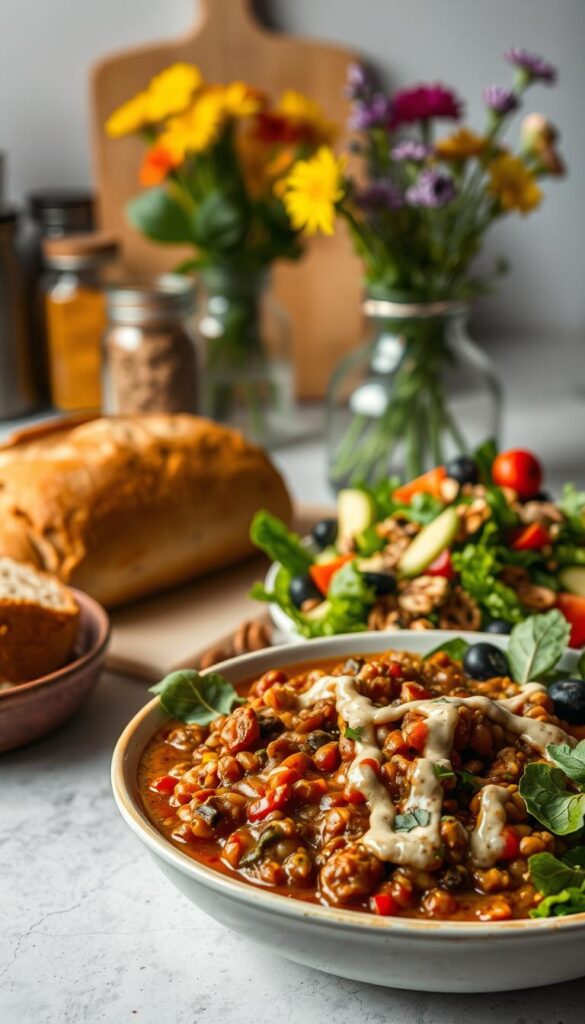
When the temperature drops, a thick stew or bright stir-fry makes dinner simple, nutritious, and bold in flavor.
Kidney bean and butternut squash stew with hearty veggies
Simmer a cozy stew with kidney beans, cubed butternut squash, onions, carrots, bell peppers, and canned tomatoes. The squash adds natural sweetness while beans supply bulk and protein.
Keep it weeknight-friendly: use low-sodium broth, a bay leaf, smoked paprika, and a splash of lemon to lift the dish quickly. Reviewers call this one delicious and perfect for freezing or packing for lunches.
Farro or brown rice veggie stir-fry with ginger-lime sauce
Build a bright stir-fry on a base of farro or brown rice, toss in steamed kale, snap peas, and shredded carrot, then finish with a ginger-lime sauce. The whole grain anchors the meal and boosts both texture and fiber.
Fold in tofu or an extra cup of beans for more protein. Batch-cook grains ahead so assembly takes minutes after work.
- Use pantry staples—onions, canned tomatoes, spices—to get big flavor fast.
- Swap in lentils, potato, or seasonal veggies when you want variety.
- Scale portions for leftovers or freezer meals to save time on busy nights.
“One-pot stews and quick grain bowls make dinner feel effortless and still packed with flavor.”
Build-a-Bowl: Easy High-Fiber Burrito and Polenta Bowls
A quick bowl can be the easiest way to turn pantry staples into a satisfying meal.
15-minute polenta bowls with kidney beans, salsa, and avocado
Make a six-ingredient bowl using instant polenta, kidney beans, salsa, avocado, cilantro, and a squeeze of lime. Cook the polenta in about five minutes, top with warmed beans and salsa, then add avocado and herbs.
This setup gives you a filling bowl in roughly 15 minutes and works well as a quick weeknight meal.
Burrito bowls over home-baked tortilla chips with grains and greens
Bake a batch of tortilla chips and layer cooked beans, leftover grains, lettuce, tomato, corn, and avocado for crunch and texture. The chips add a crunchy contrast and double as scoopers.
Reviewers praise this way of cooking for speed and flexibility — swap grains, add mango salsa, or toss on quick pickles for extra pop.
- Use canned beans and prepped produce to cut friction on busy nights.
- Keep a template: grain or polenta + beans + veg + sauce.
- Scale bowls family‑style so everyone can customize toppings.
| Dish | Core ingredients | Time |
|---|---|---|
| 15-minute Polenta Bowl | Instant polenta, kidney beans, salsa, avocado, cilantro | 15 minutes |
| Burrito Bowl with Chips | Cooked beans, leftover grains, lettuce, tomato, corn, baked chips | 10–20 minutes |
| Custom Grain Bowl | Farro or rice, beans, roasted veg, citrusy sauce | 15 minutes (if grains prepped) |
Soups and Stews with Serious Fiber
A good soup can turn pantry staples into a comforting, high‑impact meal in under an hour. Use one-pot methods to build deep flavor from aromatics and spices, not long cooks or extra oil.
Sweet potato‑cauliflower‑chickpea soup with toasted quinoa
This dish delivers about 17g fiber per serving. Simmer cubed sweet potato and cauliflower with chickpeas and warm spices until tender.
Finish with toasted quinoa for crunch and contrast. Use frozen cauliflower or pre-cubed potato to cut hands‑on time to minutes.
Black bean and sweet potato soup with mango salsa
Black beans and sweet potato form a sweet‑savory base that feels restaurant-worthy. Brighten each bowl with fresh mango salsa and a squeeze of lime.
Warming spices—cumin, smoked paprika, and a pinch of chili—build flavor without fuss.
Warming chili for batch cooking and leftovers
Make a large pot with canned beans and tomatoes to get roughly 19g per bowl. It serves about 12 and freezes up to three months.
Swap in lentils or add cubes of winter squash to vary texture and nutrition through the season.
- Lean on aromatics and spice blends for flavor rather than long braises.
- Use time-savers—pre-cut sweet potato, frozen cauliflower, or canned beans—to speed weeknight soup nights.
- Garnish with citrus, herbs, or avocado to balance richness and lift each serving.
Salads That Eat Like a Meal (Dressings Included)
Salads can be the main event when you layer grains, legumes, and bold dressings. Build bowls that travel well, pack protein, and still taste bright at lunchtime.
Crunchy cabbage and bean slaw with peanut butter-soy dressing
This salad recipe uses navy beans, black or brown rice, and toasted millet for crunch. Toss shredded cabbage and scallion with the beans and grains.
Make the dressing by whisking peanut butter, soy sauce, rice vinegar, and a touch of maple. It creates a creamy, savory dressing that holds up in a meal‑prep container.
Wheat berry, roasted veggie, kale, and maple‑mustard salad
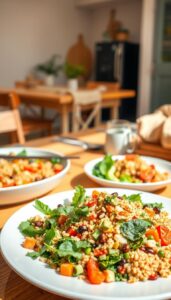
Roast squash and peppers, then fold them into cooked wheat berries, chopped kale, raisins, and pepitas.
Finish with a tangy maple‑mustard dressing. This option is popular at gatherings because it stays good and tastes even better the next day.
- Layer grains, legumes, and greens so a salad truly eats like a meal.
- Add seeds, raisins, and crisp veg for texture and extra crunch.
- Swap tahini for peanut in the dressing, or use a dollop of hummus when time is tight.
- Batch‑prep dressings on Sunday to simplify weeknight assembly.
| Dish | Key ingredients | Dressing | Time | Per‑serving fiber |
|---|---|---|---|---|
| Crunchy Cabbage & Bean Slaw | Cabbage, navy beans, black/brown rice, millet | Peanut butter‑soy | 20–30 min | 17 g |
| Wheat Berry & Roasted Veg Salad | Wheat berries, roasted squash, kale, raisins, pepitas | Maple‑mustard | 40–50 min (mostly roasting) | 8–12 g |
| Make‑ahead tip | Cooked grains, drained beans, sturdy kale | Tahini or hummus swap | Prep 15 min | Varies by portion |
Tip: Aim for a balance of chew, crunch, and a bright dressing so every bite has flavor and substance.
Pasta Night, Upgraded: Chickpeas, Lentils, and Veggie-Forward Sauces
Turn a simple pot of pasta into a smart dinner by folding in legumes and quick veg so each bowl feels complete and bright.
Chickpea rotini with lemon, avocado, and mixed veggies
Cook chickpea rotini until al dente and toss with lemon, avocado, and seasonal veggies. This 30 minutes meal gives you a creamy mouthfeel without heavy sauce.
Stir in a splash of pasta water and a pinch of salt to marry textures. Fold in zucchini, peas, or spinach to boost fiber and color.
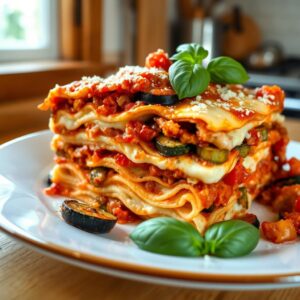
35-minute lentil “ragu” over whole grain pasta
Simmer aromatics, canned tomatoes, cooked lentils, and Italian seasoning for about 35 minutes. Add a splash of white wine vinegar to lift the flavor the way a bright dressing would for a salad.
Make extra: batch-cook the ragu to freeze or spoon over grains later in the week. Choose whole grain pasta when you want more fiber in the final dish.
“A squeeze of citrus and reserved pasta water are small tricks that change texture and taste.”
- Use pantry tomatoes and aromatics to get big flavor fast.
- Adjust with pasta water and acid for balance.
- Fold in extra veggies to increase fiber without extra time.
Tacos, Wraps, and Handhelds with Fiber and Flavor
Handheld meals are a fast way to get satisfying texture and big taste without a long cook time. Use simple builds to turn pantry staples into a lively weeknight dish.
Potato and spinach street tacos: steam cubed potato, wilt spinach with onion and garlic, then pile into warm corn tortillas. Finish each taco with cilantro and a squeeze of lime for bright flavor.
Veggie-packed spring rolls: roll rice paper with shredded carrot, cucumber, herbs, and greens. Serve with a ginger-infused dip that adds zip. This roll option delivers about 13g per serving when paired with beans or quinoa.
Baked tortilla taco salad bowls: press tortillas into oven-safe bowls, bake until crisp, then fill with quinoa, black beans, corn, pico de gallo, avocado, and cilantro. Add chips on the side or crumble them on top for crunch.
- Master quick steps—steaming potatoes, fast sautés, and oven-baked shells—to cut prep time to minutes.
- Swap chickpea flour shells for a gluten-free twist when you want variety.
- Prep grains and roasted veg ahead so assembly takes only a few minutes during the week.
“Keep a jar of pico and cooked beans on hand; they turn any handheld into a complete meal.”
Burgers, Patties, and Sandwiches That Deliver on Protein and Fiber
Turn the humble patty into a weeknight winner by using beans and oats to make sturdy, freezer-ready burgers. These builds give you a hearty, protein-forward dish that reheats well and travels easily.
Black bean-oat burgers bake up firm and hold their shape on the grill or in the oven. Use mashed black beans, oats, spices, and a little tomato paste to bind. Form patties, bake or pan-sear, then freeze extras for fast dinners.
Chickpea patties with herbs pair lemon, parsley, and oregano for bright flavor. Pan-sear until golden and serve with a dollop of hummus or a tahini-lemon sauce. Add sautéed peppers and onions for a savory finish.
- Batch-cook: form patties, flash-freeze, then bag for quick weeknight meals.
- Serve two ways: toast whole-grain buns or nest patties over greens for a lighter plate.
- Swap spreads: hummus, tahini, or salsa keep flavors varied across meals.
- Layer textures: crisp lettuce, juicy tomato, and pickled onion elevate simple sandwiches.
Use these patties as a reliable protein anchor for family burger night, or pack them for lunches that heat in minutes.
| Dish | Main ingredients | Prep time | Freezer-friendly |
|---|---|---|---|
| Black bean-oat burger | Black beans, rolled oats, spices, tomato paste | 25–30 min | Yes — freezes well |
| Chickpea herb patty | Chickpeas, lemon, parsley, oregano, garlic | 20–25 min | Yes — pan-sear from frozen |
| Greens & patty plate | Patties, mixed greens, roasted peppers, hummus | 10 min (assembly) | Depends on components |
Smart Sides and Snacks to Help You Get Fiber Between Meals
Keep a few grab-and-go sides ready so you rarely reach for ultra-processed snacks.
These small plates add texture, protein, and steady energy without a long cook. They work as dips, toppings, or quick sides to round out lunch or bridge gaps between meals.
Homemade refried beans with Brazil nut option
Mash cooked beans with a splash of broth, cumin, and lime. For a creamy twist, blitz in a few Brazil nuts—this adds a subtle buttery note and extra nutrients.
Use the spread as a dip, sandwich layer, or taco base. Pair with veggie sticks or whole grain chips for extra grams.
Crispy tofu bites and seitan stir-fry
Bake or air-fry tofu cubes tossed with smoked paprika, garlic, and a pinch of salt for crunchy, high-protein snacks you can eat warm or cold.
For a fast side, toss seitan with colorful veggies and a sweet-spicy sauce. It reheats well and delivers satisfying flavor and texture.
“Portion sides into containers so healthy snacking becomes automatic.”
- Mash refried beans and optionally add Brazil nuts for a butter-like finish.
- Bake or air-fry tofu for a portable, protein-forward bite.
- Toss seitan with mixed veggies and a quick sweet-heat glaze for a ready side.
- Whisk a simple tahini sauce to drizzle over bowls and roasted veggies.
- Keep lime, cilantro, and spices on hand to boost flavor fast.
| Snack | Main ingredients | Use |
|---|---|---|
| Refried beans (+ Brazil nuts) | Canned or cooked beans, Brazil nuts (optional), lime, cumin | Dip, spread, taco base |
| Crispy tofu bites | Firm tofu, smoked paprika, garlic, oil (or spray) | Snack, salad topper, bowl add-on |
| Seitan stir-fry | Seitan, mixed veggies, soy, chili-sweet sauce | Side, quick plate, wrap filling |
Tip: Portion sides into grab-and-go containers so you have healthy options ready when hunger strikes.
Timing Made Easy: Quick Meals Ready in Minutes
A busy evening shouldn’t mean bland food — quick builds can be ready in under 30 minutes. Use a few time-saving swaps and you’ll have a tasty meal that still meets your nutrition goals.
Fast ideas that work when time is tight:
15–30 minute spotlights
- 15-minute polenta bowl: instant polenta, warmed beans, salsa, and avocado — ready in minutes and filling.
- 30-minute chickpea pasta: lemon, avocado, and greens toss into chickpea pasta for a creamy, bright dish in about half an hour.
- Teriyaki tofu stir-fry: pan-sear tofu with broccoli and noodles or rice in under 30 minutes for a satisfying plate.
- Ramen-style soup: make a quick soup in ~25 minutes using dried mushrooms, miso, and pre-cut veg for deep umami fast.
“Keep a pot of cooked grains and a jar of sauce on hand — they turn 10 extra minutes into a complete dinner.”
Speed tips: rely on canned beans, quick-cook grains, and pre-cut veggie mixes. Layer flavor with citrus, garlic, ginger, miso, and fresh herbs instead of long simmers.
- Organize pots, pans, and staples so setup takes seconds.
- Cook once, eat twice: double grains or proteins for next-day bowls.
- Favor one-pan or one-pot methods to cut cleanup and keep weeknight cooking consistent.
Protein Plus Fiber: Beans, Lentils, Chickpeas, and Tofu Do the Heavy Lifting
Build meals that keep you full and fuel movement. Use legumes and soy as anchors so you get steady energy without heavy sauces or long prep. This is a practical way to support workouts, commute days, and weekend activity.
How legumes and soy help you stay satisfied
How legumes and soy support active lifestyles
Pairing protein with slow-digesting carbs spreads energy across the day. For example, a chickpea flour “omelette” can provide about 18g fiber and 19g protein per serving.
Similarly, stir-fries built on farro plus tofu or lentils can reach roughly 19g protein while keeping textures bright and light. You’ll find these builds are an easy way to hit macros without heavy sauces.
- You’ll see how pairing protein with fiber—beans, lentils, chickpeas, and tofu—keeps you full and energized.
- Anchor meals with legumes to support workouts and busy schedules without extra fuss.
- Choose quick methods—baking, simmering, stir-frying—to meet goals fast.
- Rotate plant proteins for variety and to round out amino acids across meals.
“Lean on legumes and soy: they deliver satiety, steady energy, and simple meal wins.”
| Ingredient | Typical serving benefit | Quick use |
|---|---|---|
| Chickpeas | Satiety and gentle carbs | Roast, mash, or fold into a quick recipe |
| Lentils | Protein support and texture | Simmer into ragu or toss in salads |
| Tofu | Versatile protein, reheats well | Pan-sear, bake, or air-fry |
Vegan Fiber Rich Recipes
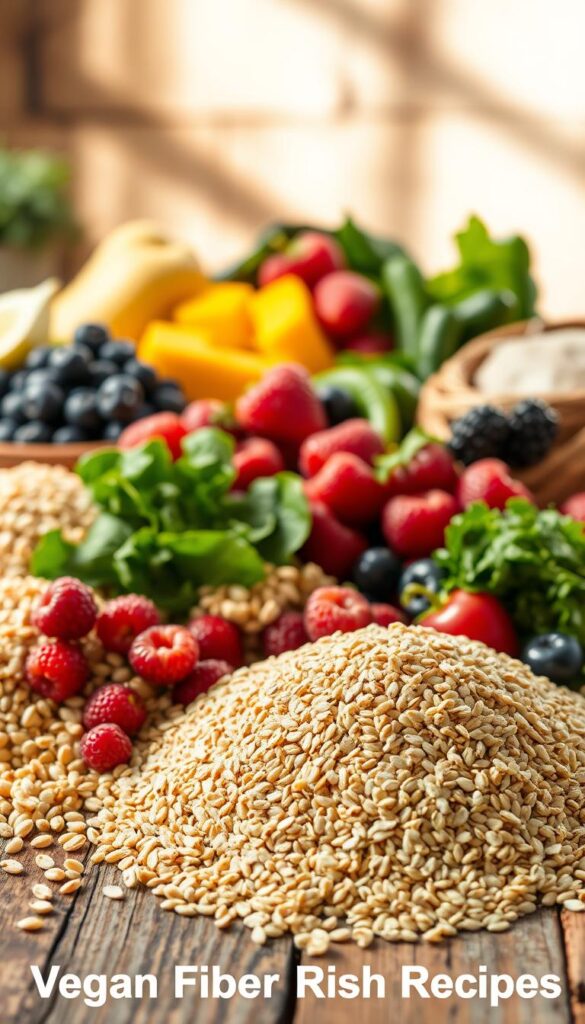
Choose simple builds that boost grams per serving while keeping prep short and flavors bright. Use per-serving notes to pick dishes that most efficiently help you get fiber on busy days.
Per-serving notes and simple swaps to boost grams without extra time
Prioritize dishes with clear per serving callouts. For example, berry almond baked oatmeal gives >8g, overnight oats about ~12g, and a chickpea flour omelette can reach 18g per serving.
Swap refined grains for whole-grain oats or whole-wheat pasta. Swap processed meat substitutes for chickpeas or lentils to raise fiber and simplify ingredients.
For soups and stews, add sweet potato or kale near the end of cooking to lift grams without extra steps. A batch chili can deliver about 19g per serving and freezes well.
Kid-friendly, meal-prep friendly picks for breakfast, lunch, and dinner
Lean on overnight oats as a no-cook make-ahead breakfast that holds up in jars. It’s easy, portable, and hits ~12g per jar when built with oats, chia, and berries.
Pack lunches with bean wraps, grain salads, or a bowl that reheats evenly. Use mild spices and creamy textures so kids accept the flavors.
- Pick bakes and jars for meal prep: they scale and reheat without fuss.
- Fold kale, chickpeas, and sweet potato into bowls to boost micronutrients and fiber.
- Keep a short list of go-to recipes that consistently deliver high fiber per serving for the week.
“A few versatile ingredients and clear per-serving targets make meal planning faster and more effective.”
Conclusion
Make hitting daily goals easier by rotating a handful of flexible, whole‑food builds throughout each week. Use oats, beans, whole grains, and seasonal veg so you can get fiber without elaborate prep. This is a practical way to keep meals consistent and flavorful.
Plan a few go-to dishes—soup, salad, bowl, and a simple dinner—and reuse components to save time. Batch-cook chili or stews with butternut squash and sweet potatoes, roast cauliflower for multiple meals, and keep a mason jar dressing to lift any plate.
Start today: pick one new recipe or dish, adapt portions for your household, and repeat what works. Over time you’ll find a reliable way to eat well, vary flavor, and meet your goals one satisfying meal at a time.